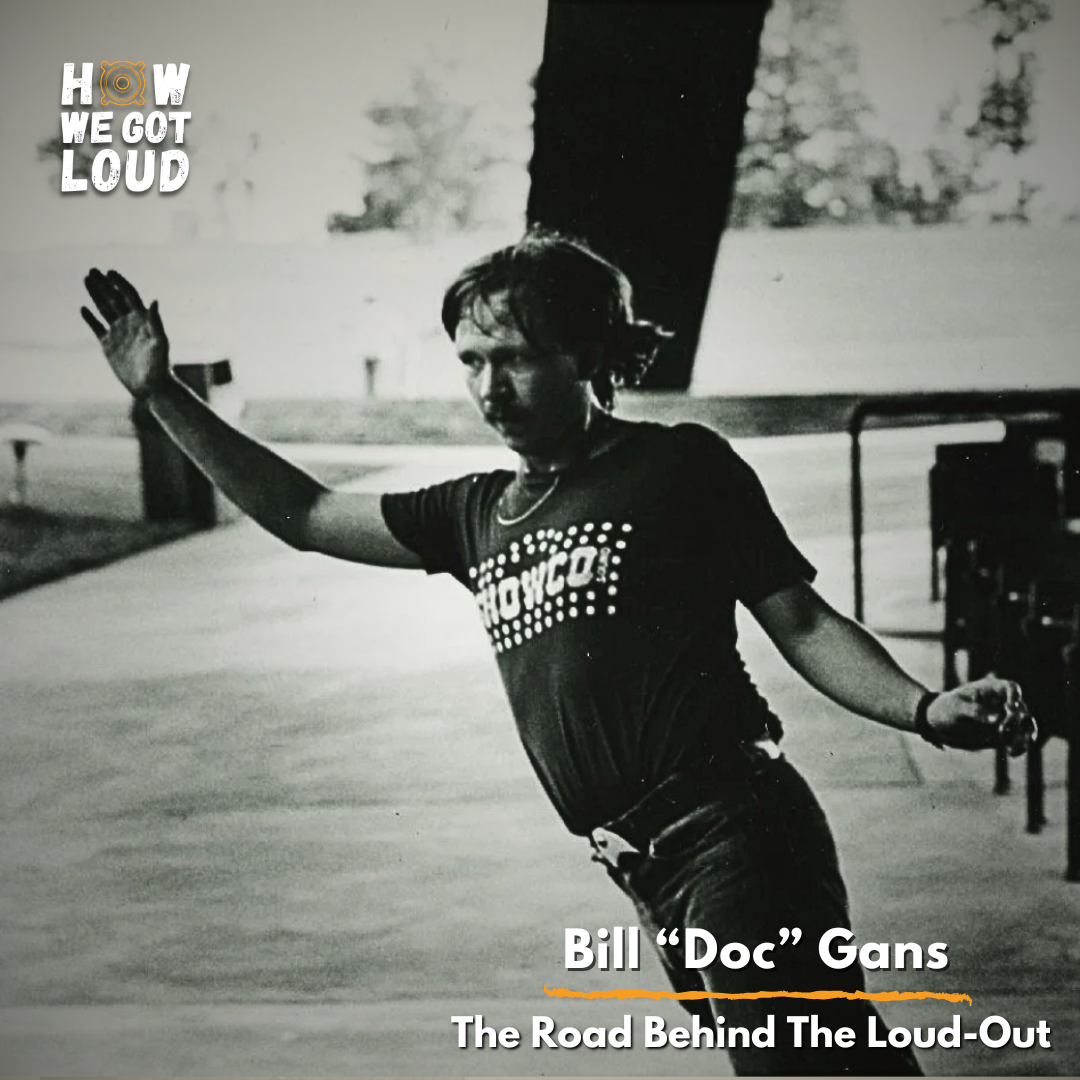
Bill “Doc” Gans, The Road Behind The Load-Out
Some songs become more than songs.
For me, Jackson Browne’s “The Load-Out/Stay” has been part of my life since childhood. It was the song my Dad played for me on the way home from gigs, explaining that it was written for people like us: the roadies, sound crews, truck loaders, stagehands, and everyone else behind the scenes who make the show happen.
That song is what first led me to Bill “Doc” Gans.
But this conversation became much bigger than one song.
Doc worked for Showco from 1973 to 1982, during one of the most important eras in the development of modern concert touring. He came into the business with no real background in audio, painted speaker cabinets in the shop, learned by watching others, and eventually found himself on the road with some of the biggest artists in the world.
That is one of the things I loved most about this conversation.
Doc’s story is not a clean, polished career path. It is a road story. He stumbled into Showco, figured things out by surviving them, learned monitors in an era when the rules were still being written, and became part of a company that helped shape what modern touring production would become.
Showco was not just another sound company. They were building systems, designing consoles, solving problems, pushing monitor technology forward, and eventually helping change concert lighting through the work that led to Vari-Lite. It was part sound company, part production company, part engineering lab, and part road family.
Doc was right in the middle of that world.
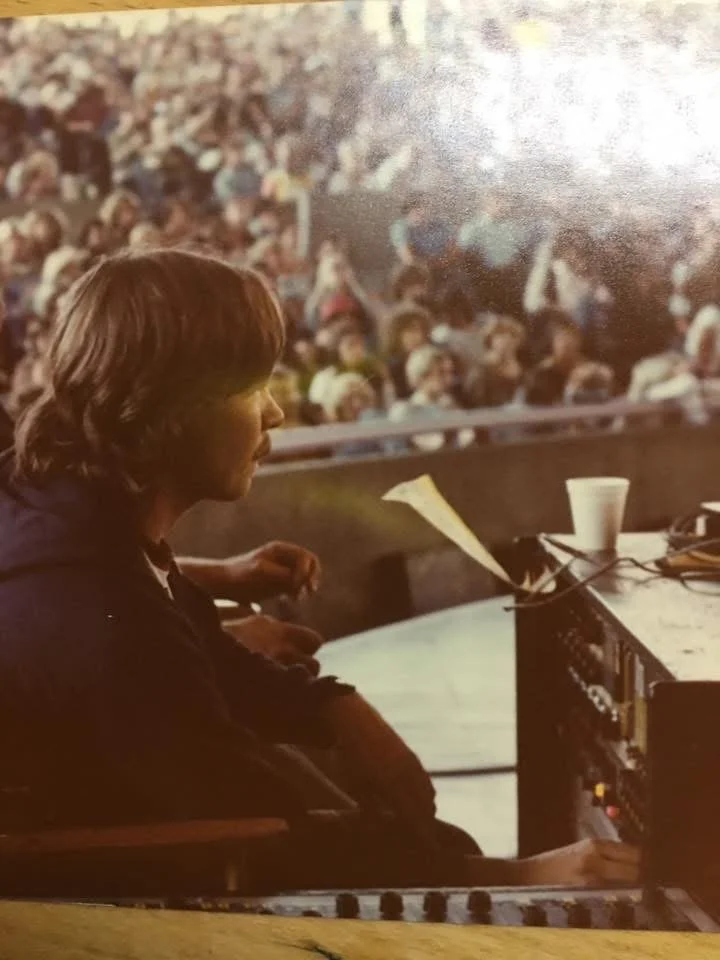
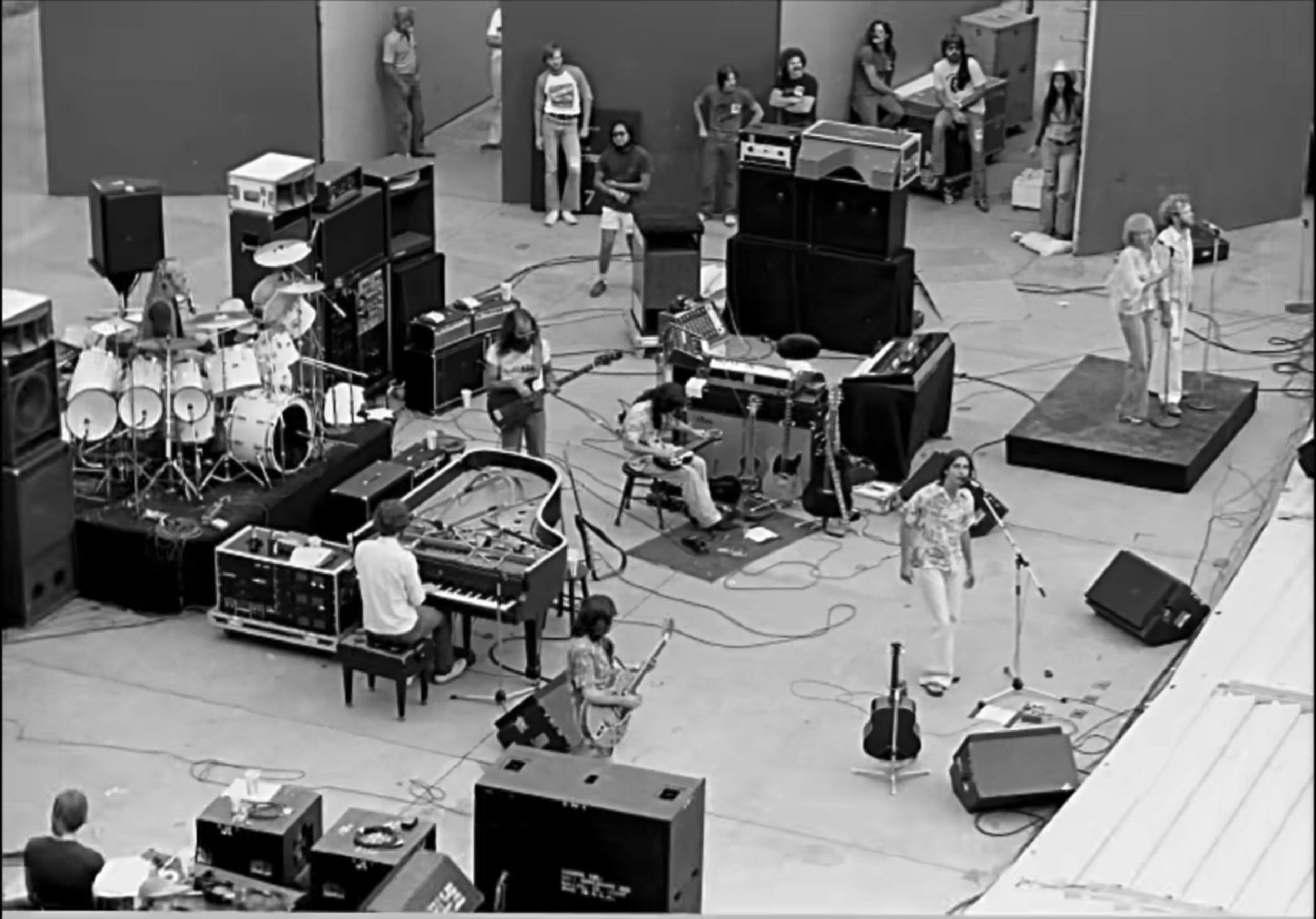
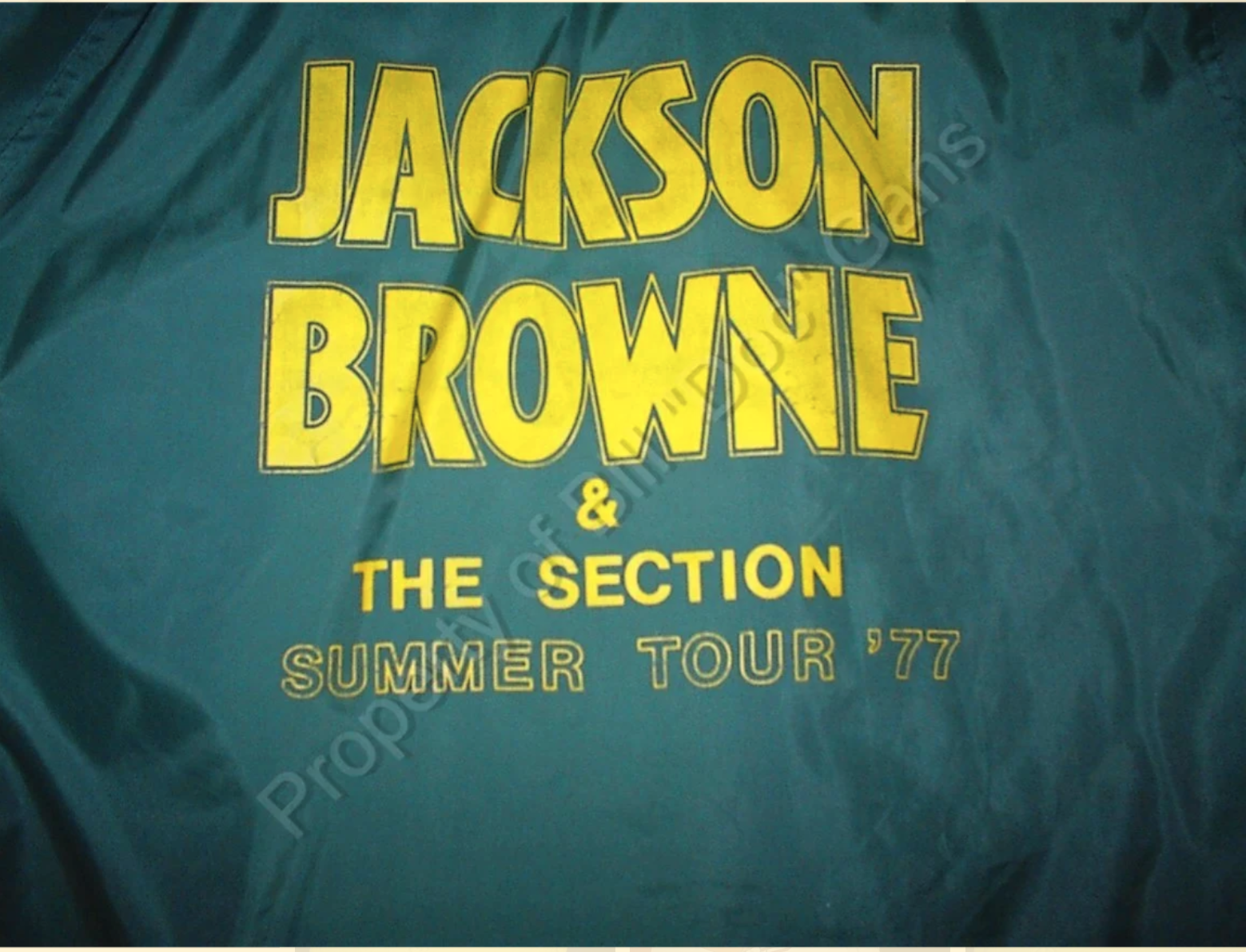
In this episode, we do talk about Jackson Browne’s Running on Empty tour. Doc was the monitor engineer on that tour, and he was side stage in 1977 at Merriweather Post Pavilion when “The Load-Out/Stay” was performed and recorded. That alone would make this conversation worth having.
But Doc’s story does not stop there.
We talk about how he ended up at Showco, what it was like learning live sound in the early 1970s, and how little formal training existed in those days. We talk about monitor mixing before in-ears, when floor wedges, loud stages, feedback, and body language were the tools of the trade.
We talk about James Taylor, The Section, Jackson Browne, The Who, ZZ Top, Average White Band, Uriah Heep, and the strange, funny, difficult, unforgettable reality of life on the road.
We talk about Jim Bornhorst, the Showco Superboard, and the kind of people who were not just mixing shows, but inventing the tools the industry would use next. We talk about Vari-Lite, early monitor systems, recording trucks, stage volume, and the constant problem-solving that came with doing large-scale shows before the modern touring playbook existed.
And then there are the stories.
Doc tells stories the way road people tell stories. They wander. They get funny. They get blunt. They sometimes go somewhere you did not expect. There are moments involving Keith Moon, John Bonham, Billy Gibbons, a Corvette, a cattle prod, a very loud stage, and more than a few reminders that the touring world of the 1970s was a very different place.
This is not a tightly scripted documentary.
It is a long-form road conversation with someone who lived it.
That matters to me because the history of live sound is not just a list of gear, companies, and tour dates. It is made up of the people who were there. The ones who loaded the trucks, painted the cabinets, built the systems, mixed the shows, solved the problems, made mistakes, got better, and kept moving to the next city.
Doc’s career sits right in the middle of a turning point for the industry. He was there when touring sound was growing up. When monitor mixing was becoming its own discipline. When companies like Showco were helping define what a full-service touring production company could be. When the people doing the work were often inventing the job while they were doing it.
That is what How We Got Loud is here to preserve.
Not just the gear.
Not just the famous names on the marquee.
The people behind it.
The stories behind it.
The road behind it.

Showco Superboard “A”
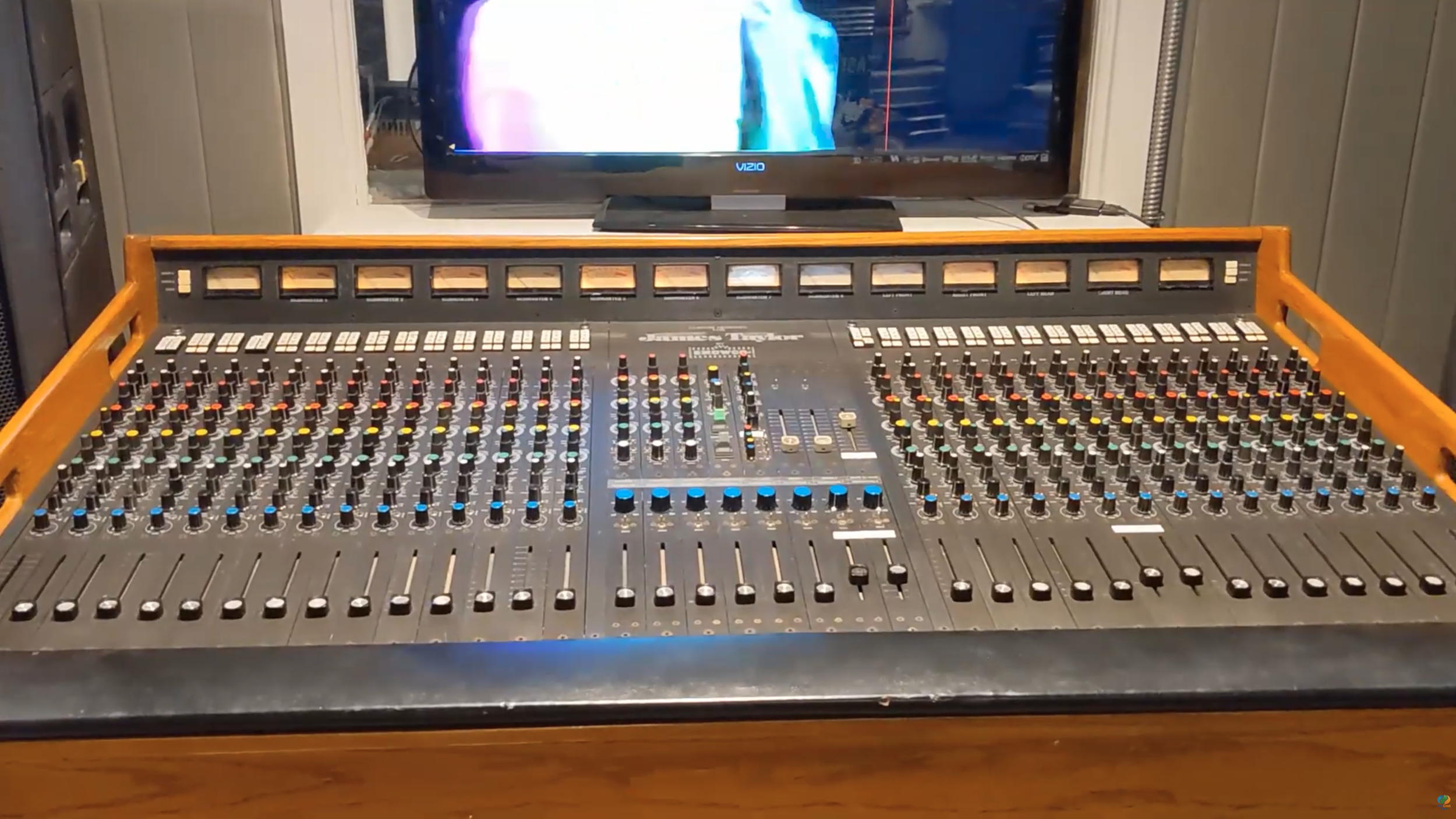
Showco Superboard “A”
Showco was an early pioneer in the live concert sound business. Co-founder Rusty Brutsche and his partner, Jack Maxson, conceived the basic console layout in 1972. The electronic design was by Jim Bornhorst. Up until then, Showco was using rack mount, 6-input solid state mixers that had been designed and built in house by Chuck Conrad. Known widely as “Yellow Mixers,” they were painted with Harvest Gold refrigerator paint. They were intended to replace a Grommes tube-type unit that Showco had been using. They featured bass and treble tone controls and a couple of monitor sends per channel. By today’s standards that is very primitive, but at the time, it was cutting edge.
Maxson had one “desk style” console built by Conrad in ’71, used primarily on Three Dog Night as it had a more professional layout for the then prestigious band. The purpose of the Superboard development was to put Showco in the forefront of the emerging touring rock ’n’ roll business.
Rusty and Jim Bornhorst worked on the console design through many late night hours. Rusty did the mechanical designs and Jim did all of the electronics including all printed circuit board layouts. A third employee, Ron Fox, provided the walnut case work and road case design. They were a good team.
The project began in early ’73. They had this one going late that summer. A total of 8 consoles were built over the next couple of years. Some were on the road for over 20 years and were extremely reliable. They were used on every first tier act of the day, from Aerosmith to Led Zeppelin. On display is first console, Superboard A. It was about to be scrapped, doomed to the same fate of its seven brothers, and Jim couldn’t let it go. Recently he donated it to the Texas Broadcast Museum where it can have a happy retirement. This console design helped put Showco on the map. It also provided millions of concert goers with top notch sound quality at live events through the world, provided the signal source for countless live recordings and became a launching point for the careers of many now veteran sound engineers.
Live Recording Credits
a partial listing
King Biscuit Flour Hour Linda Ronstadt at Universal Amphitheater LA, CA 1976
Paul McCartney Wings Over America Tour 1976
Jackson Browne Running on Empty 1977
Willie Nelson and Family Live Lake Tahoe 1978
You can see this console at the Texas Broadcast Museum.
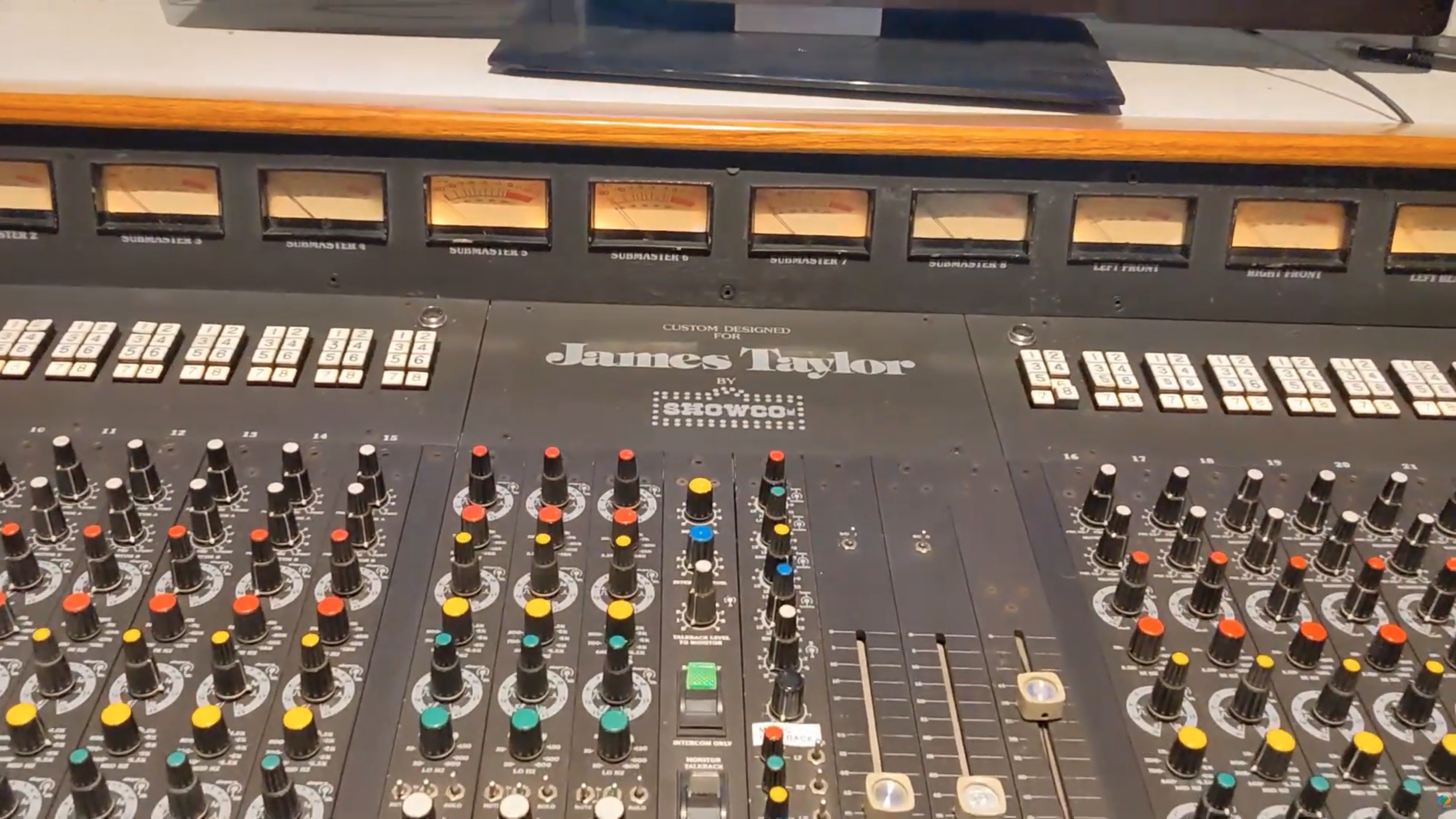
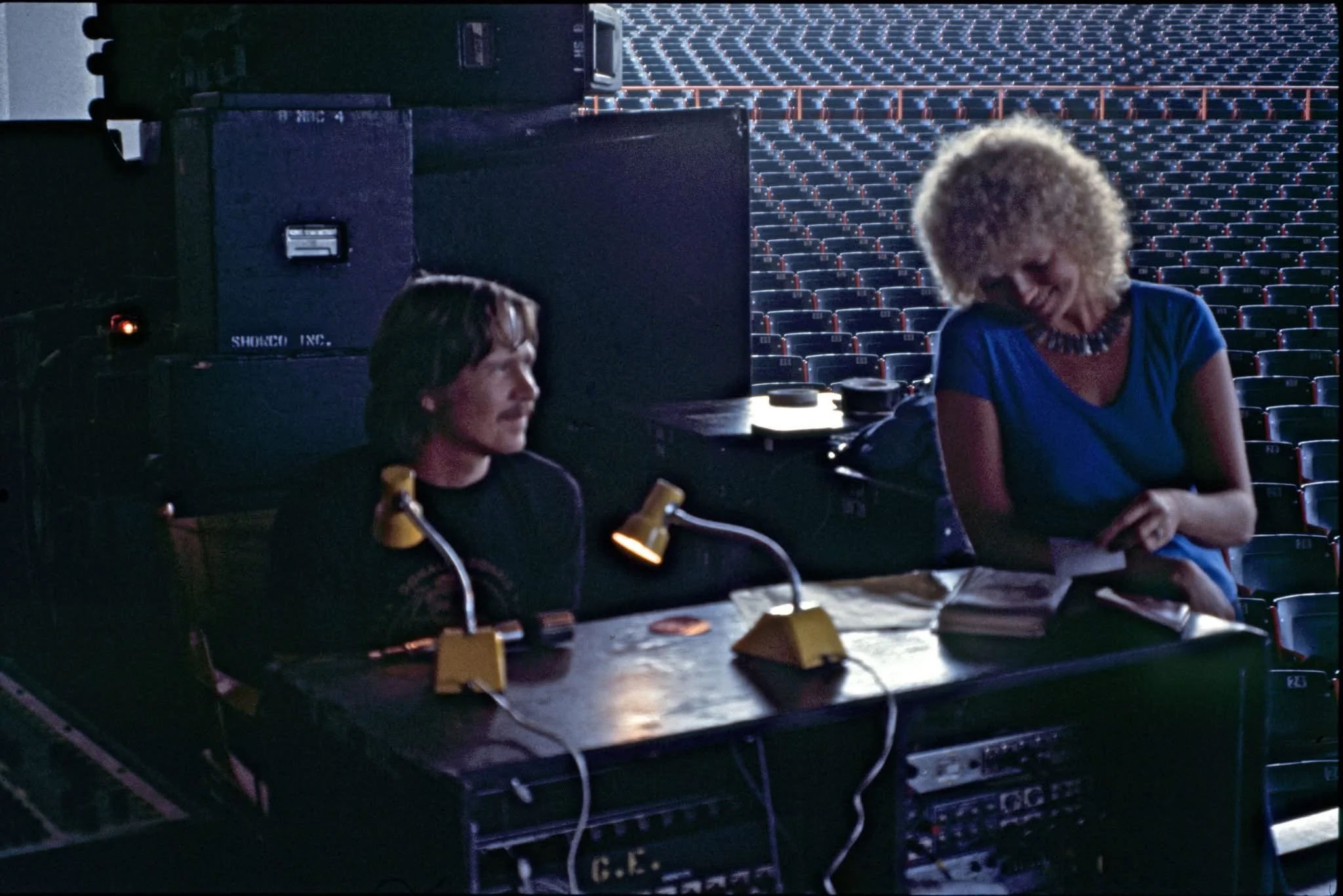
Showco Superboard “A” - James Taylor
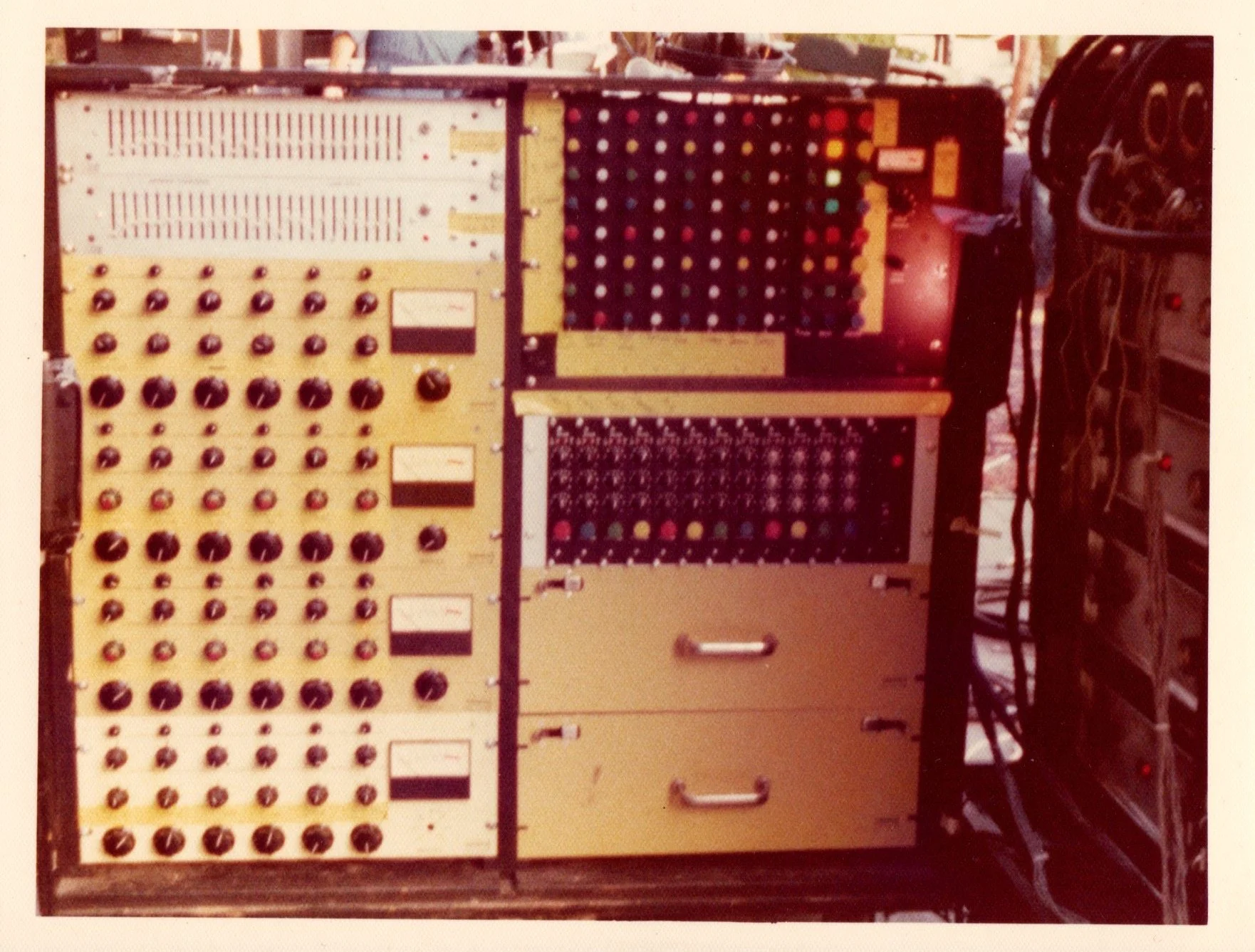
Showco Yellow Mixer monitor rig used by Bill “Doc” Gans on James Taylor’s tour around 1975–1976.
On the left are four Showco proprietary six-channel mixers known as Yellow Mixers. The unit at the top right was a proprietary matrix mixer, and below that was Showco’s Feedback Suppressor.
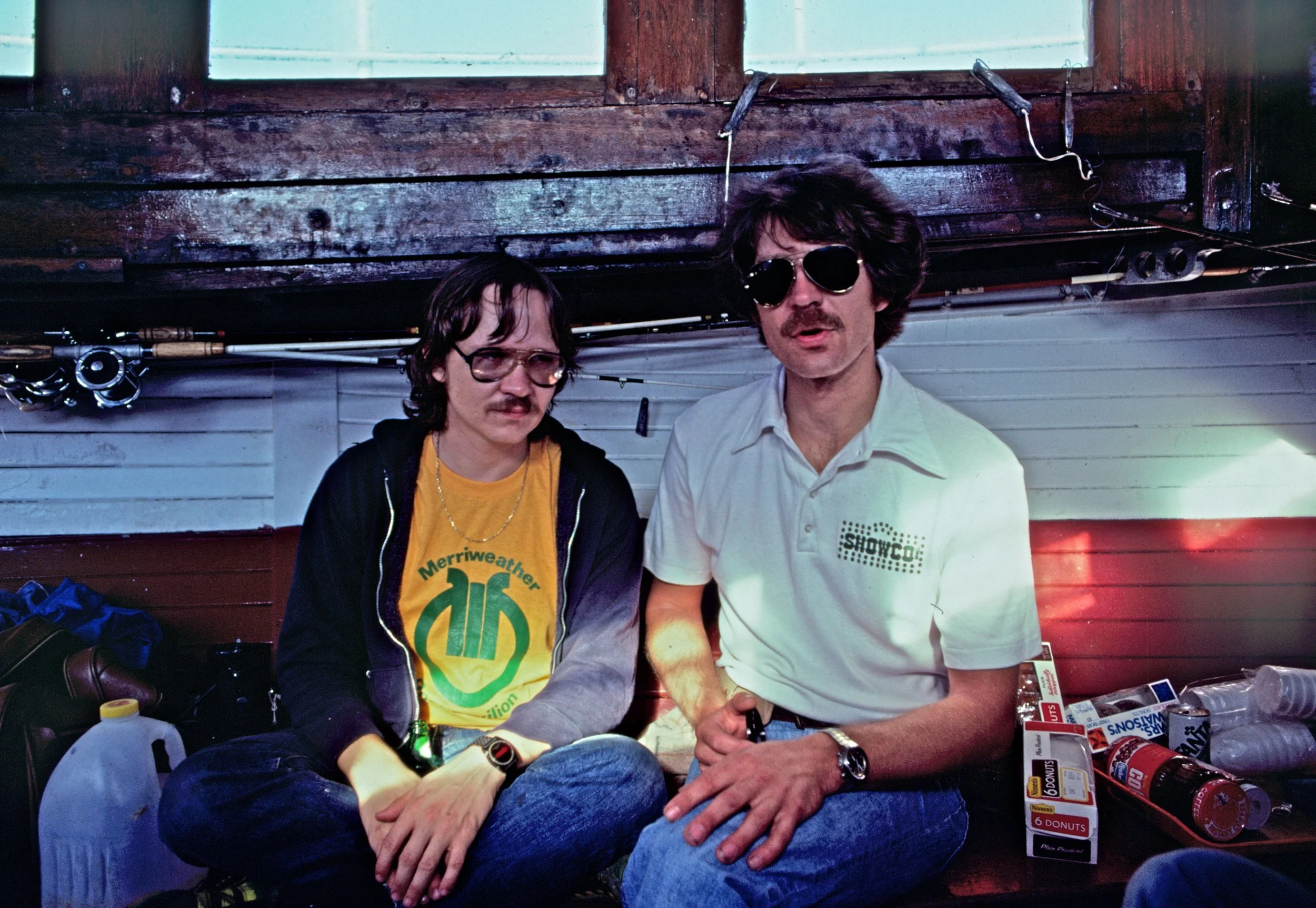
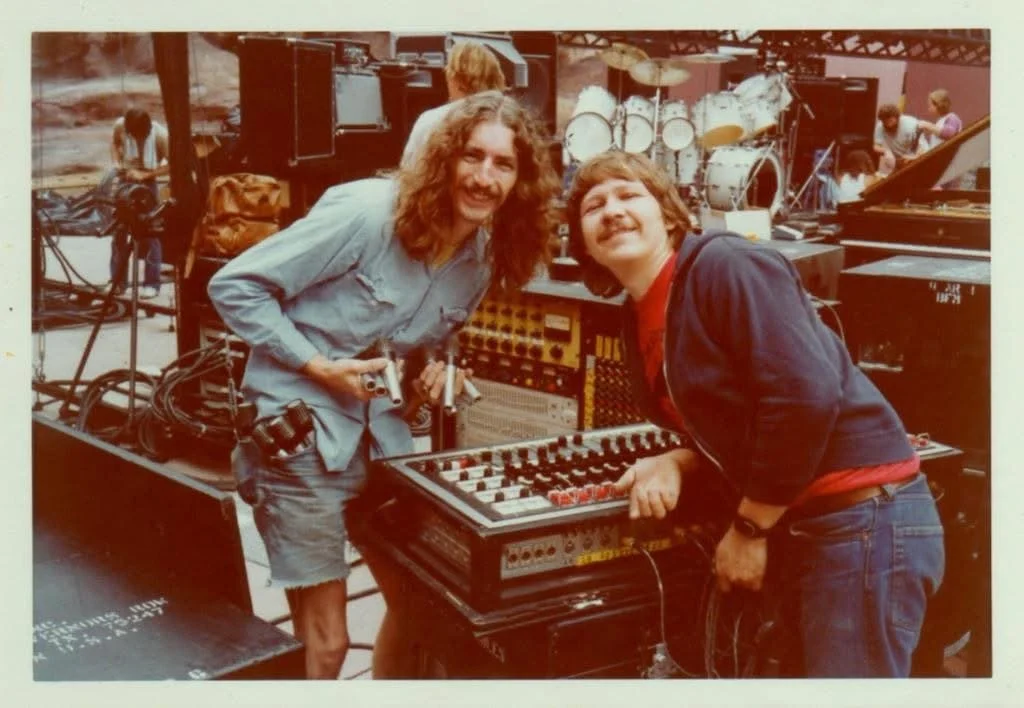
Bill “Doc” Gans and Jim Bornhorst
During the Running on Empty tour, Doc and Jim Bornhorst chartered a boat somewhere in the Northeast and went cod fishing.
In Doc’s words: “We chartered a boat somewhere in the Northeast and went fishin’.”
A quiet off-day moment from a tour that became part of live sound history.
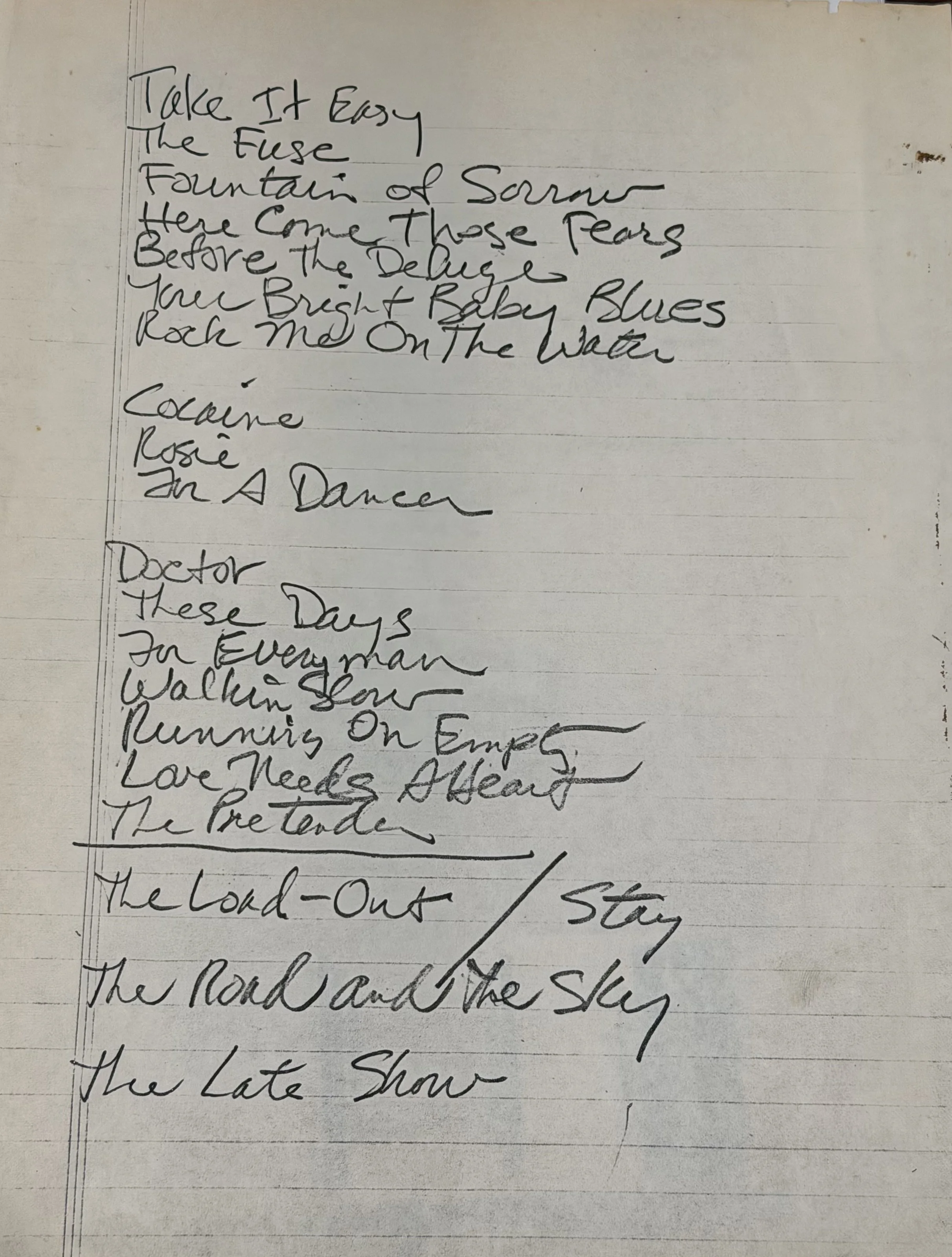
Jackson Browne “Running on Empty” Tour Handwritten Setlist
A handwritten setlist from Jackson Browne’s Running on Empty tour.
The list includes songs that would become central to the tour and the album, including “Running on Empty,” “The Load-Out,” and “Stay.”
It’s a simple piece of paper, but it captures a moment from a tour that blurred the line between the show, the road, and the people working behind the scenes.
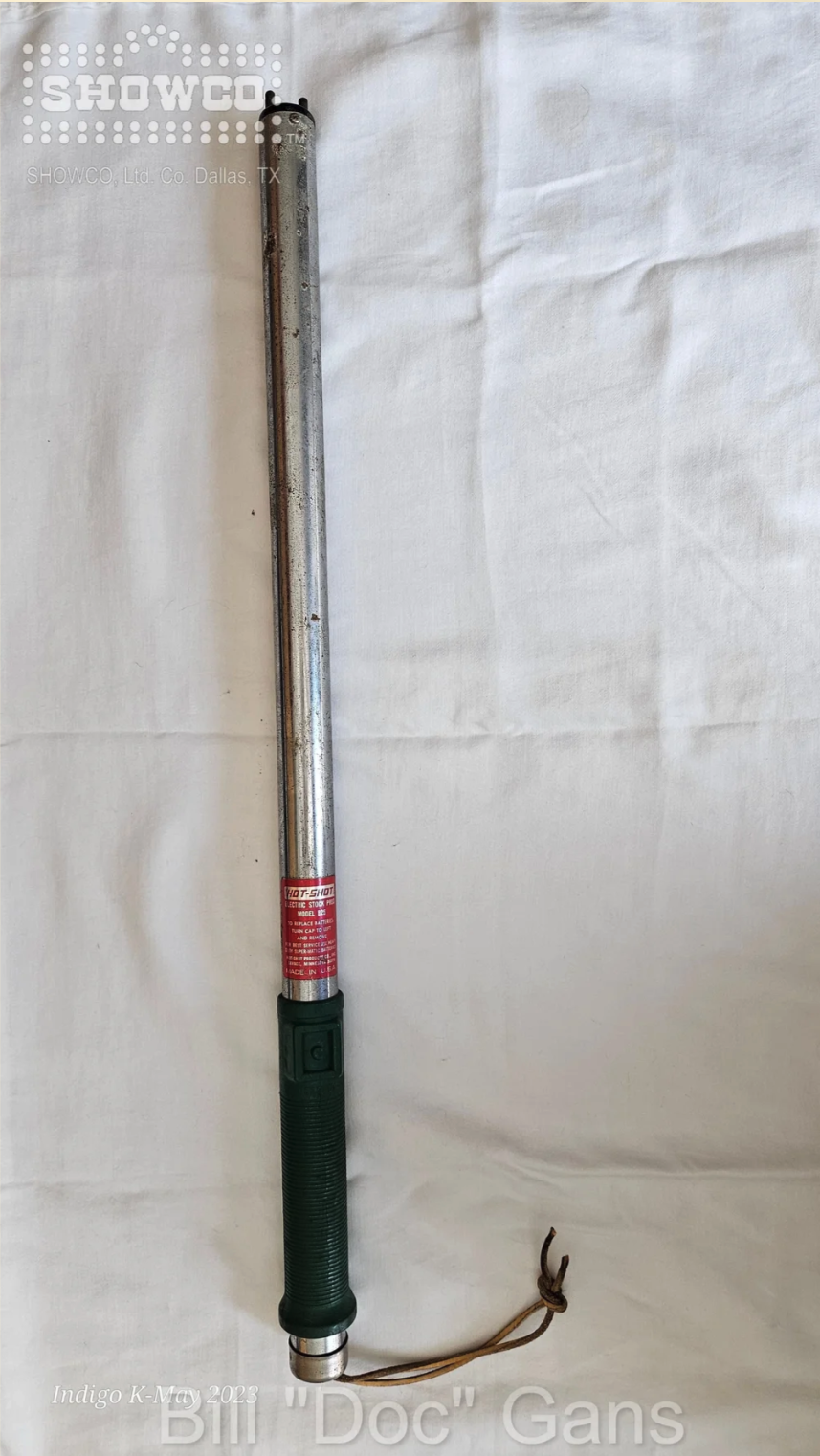
Bill “Doc” Gans’ Showco Cattle Prod
One of the stranger artifacts from Doc’s Showco road days.
Part tool, part joke, part road legend, this cattle prod is a reminder of how raw, creative, and unfiltered the early touring world could be.
Listen to the episode for the full story.
Learn More About Showco History from the Showco Archives
A major thank you to Indigo Kretzschmar-May, who runs the Showco Archives and helped connect me with Bill “Doc” Gans.
Her work preserving Showco’s history is incredible. The archive is filled with photos, artifacts, stories, and firsthand pieces of live sound history that might otherwise be lost.
If you are interested in the early days of modern concert production, the Showco Archives are absolutely worth exploring.