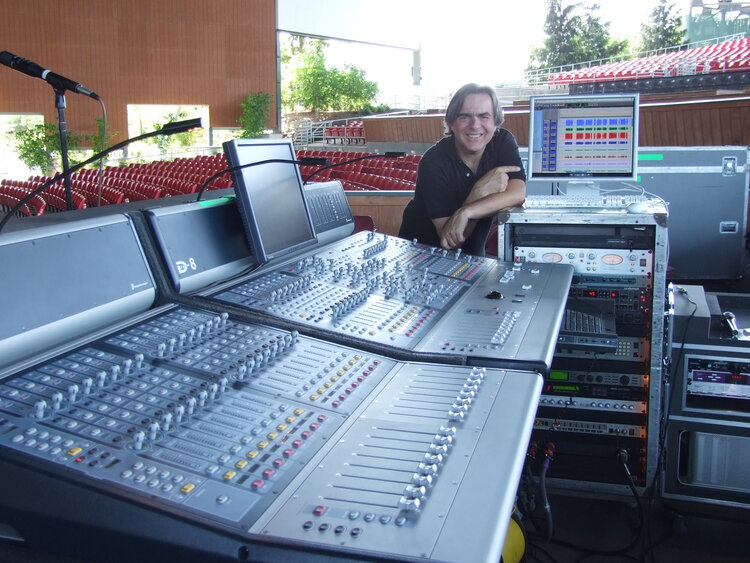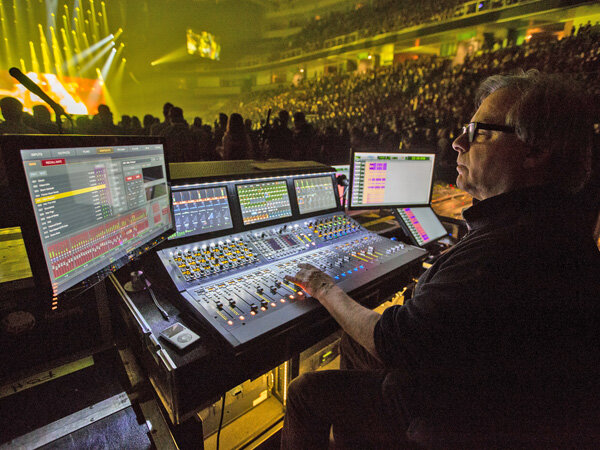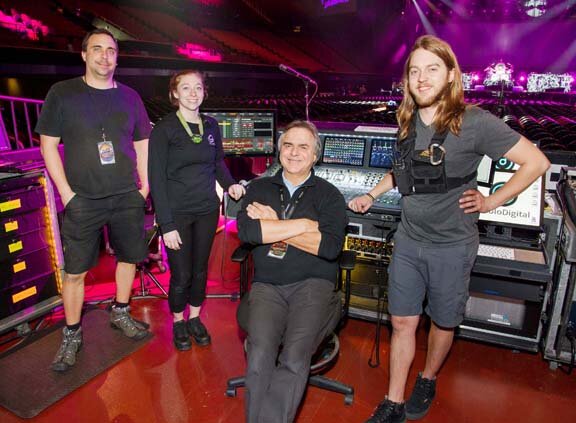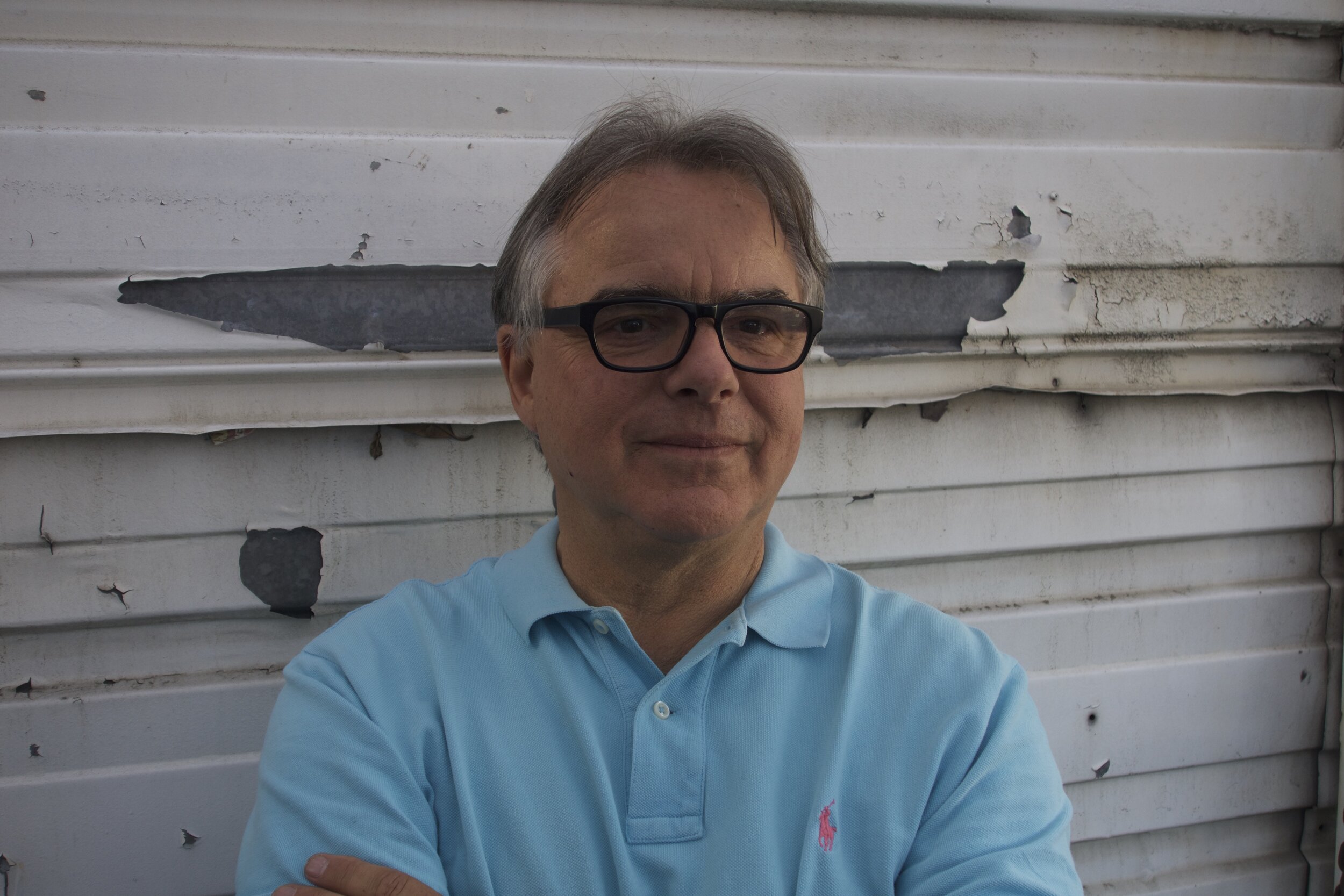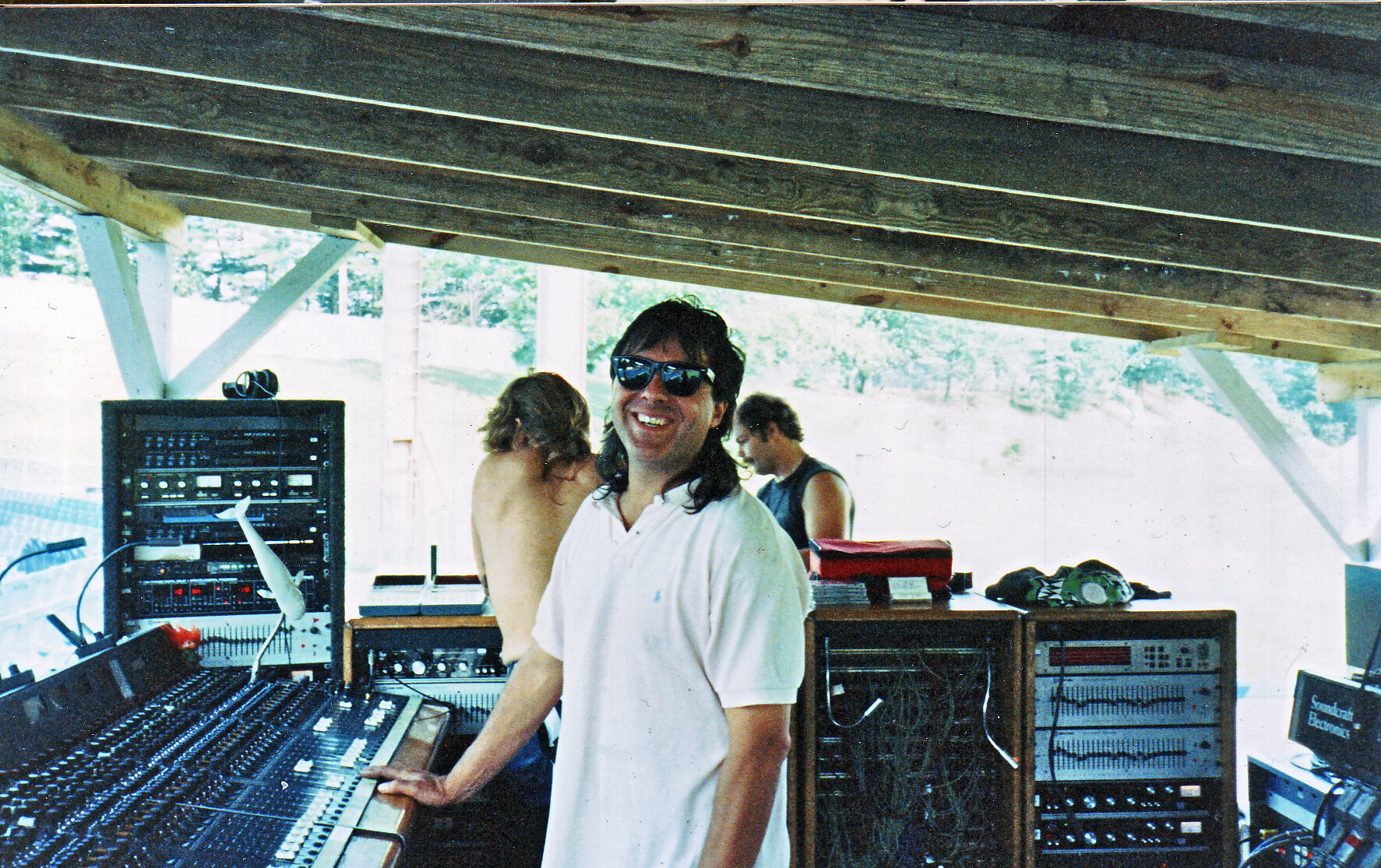
Greg Price, Mixing Ozzy, Sabbath, Van Halen and Beyond
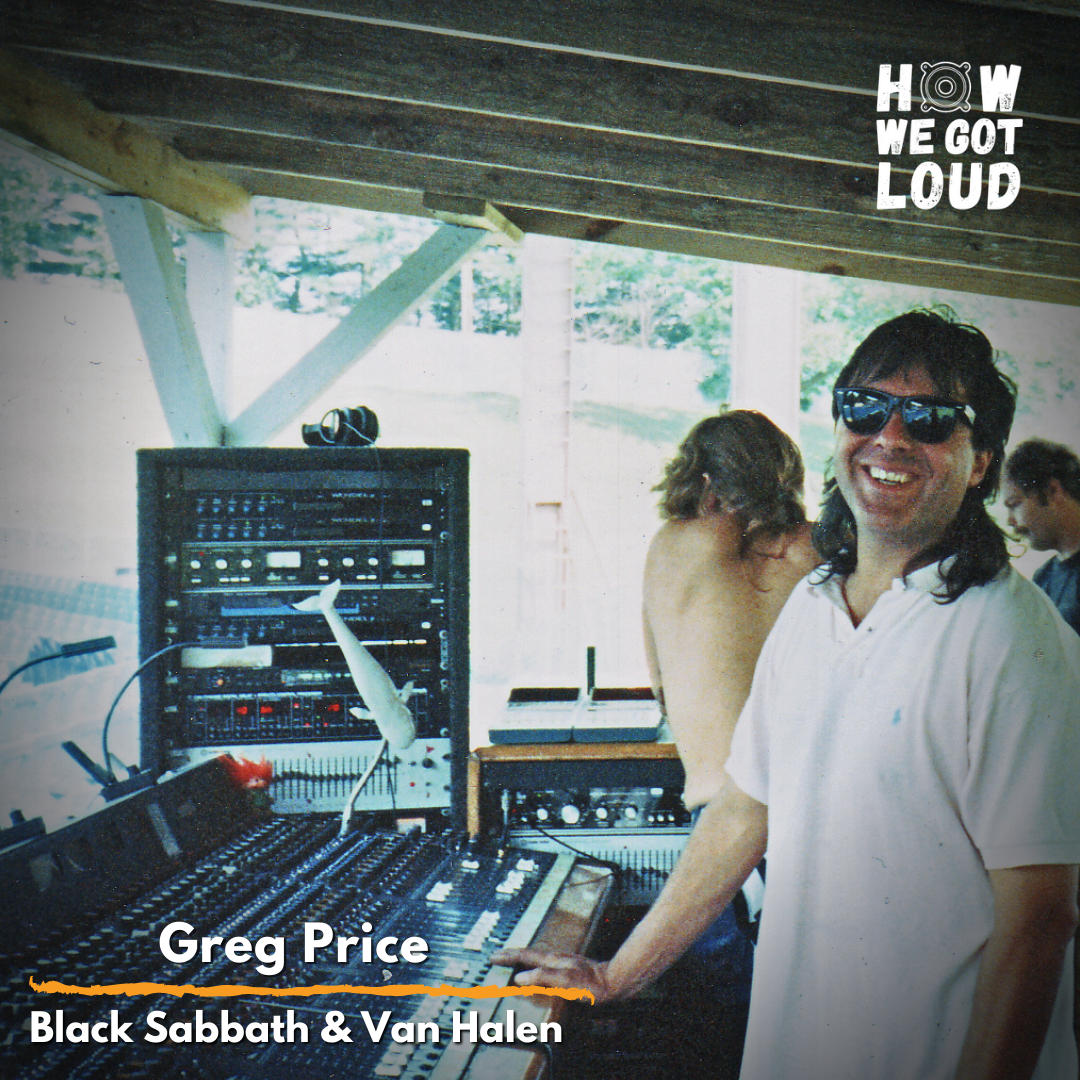
Greg Price: From the Studio to the Stage and Back Again
“Start with the album and then become a producer. Don’t flatline the thing. Make it exciting.”
That statement captures the philosophy that has guided Greg Price through more than four decades at the highest levels of live sound and recording.
Greg has mixed some of the biggest and most powerful artists in rock history, including Ozzy Osbourne, Black Sabbath, Van Halen, Rage Against the Machine, Audioslave, KISS, Poison, The Cult, Creed, Steve Miller, Huey Lewis, Glen Campbell, Pablo Cruise, and many others.
But a list of artists does not fully explain why Greg’s career is so significant.
What separates Greg is his ability to move between the studio and the concert stage. He did not approach live sound as a lesser version of recording. He spent his career trying to bring the precision, musicality, and creative decision-making of the recording studio into front of house, while preserving the physical force and excitement that can only happen in a room filled with an audience.
His goal was never simply to make a concert sound like the record.
The record was the starting point.
Discovering the Other Side of the Studio Glass
Greg’s journey into audio began in the mid-1970s through his brother, Steve Price, the drummer for Pablo Cruise.
At the time, Greg was living in Los Angeles and running a furniture store. When Pablo Cruise came to town to record, Greg visited the band in the studio. During one of those visits, he watched producer and engineer Val Garay working behind the mixer with Greg Ladanyi assisting.
Greg understood what the musicians were doing. What captured his attention was what was happening on the other side of the glass.
Before he left the studio, he knew he wanted to become an engineer.
Greg returned to the Bay Area and joined Pablo Cruise on the road. He started at the bottom, driving the truck, setting up guitars, handling equipment, and doing whatever the band needed. Touring gave him access to the stage, but Pablo Cruise also became his entrance into professional recording.
Between tours, Greg worked in the studio and developed under some extraordinary mentors.
Bill Schnee taught him how to listen, how to select microphones, and how to capture a sound instead of trying to force one into existence. Tom Dowd taught him that the most expensive or exotic microphone was not necessarily the correct one. Sometimes the right tool was a basic dynamic microphone placed by someone who understood exactly what they wanted to hear.
Greg spent extensive time at the Record Plant in Sausalito, assisting, engineering demos, working on Pablo Cruise projects, and learning around people such as Mike Clink and Ron Nevison. He worked on Huey Lewis demos and club dates before Huey Lewis and the News became one of the defining bands of the 1980s.
He also studied electronics, signal flow, harmonics, and the technical behavior of the equipment he was using. Because Greg played piano, he began connecting musical notes with frequencies. He could hear a problem, associate it with a pitch, and understand where it lived electronically.
That combination of musical instinct, studio discipline, and technical curiosity became the foundation of everything that followed.
The Night Greg Price Became a Live Mixer
Greg did not initially plan to become a front-of-house engineer.
During Pablo Cruise’s second tour, he was sitting on his brother’s drum riser when bandleader Cory Lerios approached him and told him to stop what he was doing and go mix the show.
Greg had never mixed a live show.
The band had listened to the headphone mixes he created in the studio and believed he could translate that ability to front of house. Greg walked out to the mixer, told Silverfish Audio’s Joel Silverman that he had no idea what he was doing, and received a simple piece of advice:
Treat it like the recording studio. You have an equalizer and a fader. Do what you already know how to do.
The first song worked.
Greg immediately felt at home.
From there, he began absorbing everything he could from the people and sound companies around him. He credits Silverfish Audio, Sound On Stage, Maryland Sound, A1 Audio, and the engineers and owners connected to those companies with teaching him the practical realities of touring sound.
When Pablo Cruise traveled on the East Coast, the band used Maryland Sound. Greg developed relationships with Bob Goldstein and other members of that early organization. In Northern California, he worked on and off for Sound On Stage for approximately 11 years, taking local and touring work whenever he was not on the road or inside the Record Plant.
This was a period when sound companies were not simply equipment vendors. They were workshops, laboratories, training grounds, and career networks.
Companies built proprietary mixers, loudspeaker cabinets, monitor systems, crossovers, and drive electronics because commercial products had not yet caught up with the demands of touring. A young engineer learned by helping fly the PA, wiring systems, watching experienced crews, and solving problems in real time.
Greg was not someone who remained on the bus until soundcheck.
Even as a support-act engineer, he was inside the venue helping the sound crew build the system. He wanted to understand how everything worked, why decisions were made, and what could be improved.
Trying to Build a Recording Studio at Front of House
Greg’s studio background also created frustration.
He could spend one day working on a Neve, API, Trident, or another high-quality studio mixer, then walk into a venue and be expected to create the same musical result on touring equipment that sounded dramatically different.
He wanted to recreate the way he made records, but do it live.
That search led him through Soundcraft, Yamaha, Tycobrahe, API-based live systems, Jim Gamble mixers, Midas, and eventually the Midas XL4. His first meaningful exposure to Midas came through Concert Sound while touring Europe with Steve Miller.
After hearing what the mixer could do, Greg says he was forever ruined. It changed his expectations for what was possible at front of house.
His concern was never equipment for its own sake. Greg wanted tools that would allow him to preserve the character of the musicians and make deliberate production decisions.
He also believes that loudspeaker systems and their dividing networks were often the true limitation in achieving studio-quality results. Mixers and processing continued to improve, but many touring loudspeaker systems struggled with consistency, crossover behavior, and tonal accuracy.
Greg’s career passed through nearly every major technological transition in modern concert sound, from proprietary horn-loaded systems and third-octave equalizers through Showco S4, Showco Prism, EAW KF850, modern line arrays, integrated digital processing, virtual soundcheck, and high-channel-count multitrack recording.
He did not simply witness those changes.
He had to make each generation of technology work in front of tens of thousands of people.
Turning Rock Shows Into Records With an Audience
By the late 1980s and early 1990s, Greg moved deeper into major rock touring with artists including Poison, KISS, and The Cult.
With KISS, his focus was not only on volume, guitars, and spectacle. Greg recognized that the choruses were the emotional center of the show. The vocals needed to rise above the guitars so that an entire arena could sing together.
He wanted people leaving the building saying they had never realized how well the band could sing.
That was Greg’s approach. Study the records, understand what the artist intended, earn the artist’s trust, and then produce the concert from front of house.
When Greg mixed Van Halen, that philosophy reached another level.
During “Eruption,” Greg felt that Eddie Van Halen’s live guitar tone could become thinner than the sound people associated with the recording. Greg added a tightly controlled amount of 50 Hz to the guitar during the solo, strengthening the percussive impact of Eddie’s low E string.
Eddie immediately heard and felt the difference.
Greg was faithfully representing one of the most recognizable guitar performances ever recorded, but he was also taking advantage of the scale and physical capability of a concert PA.
That distinction matters.
Greg was not changing the identity of the music. He was finding a way to make the audience experience it more intensely.
“If I want a flatline thing, I’m going to go home and put the record on.”
Seven Years of Knocking on Showco’s Door
Greg understood early that relationships with sound companies mattered.
As his career grew, he became determined to work with the leading companies in the industry. For approximately seven years, he repeatedly traveled to Dallas and asked Showco for an opportunity.
Eventually, M. L. Procise gave him one.
It was not the assignment Greg expected.
Showco needed someone to take over an Ozzy Osbourne tour after another senior engineer was no longer available. Greg was told that the tour would last around three months and that this was his chance to prove himself to the company.
The tour lasted approximately 18 months.
It also began a relationship with Ozzy that Greg describes as lasting roughly 25 years.
Greg went on to become closely involved in Ozzfest, not only as Ozzy’s front-of-house mixer, but as an audio leader responsible for helping determine what equipment belonged on each stage and how consistent sound quality could be maintained throughout brutally long festival days.
Load-in could begin before sunrise. The music continued across multiple stages until late at night. Greg’s standard was that the sound should be right for the first artist and remain right until he finished mixing the final act.
His experience as a support-act engineer shaped the way he handled that responsibility.
Greg did not want younger engineers deliberately restricted so the headliner would sound better. He wanted them to have proper mixers, system equalization, and the tools needed to compete.
“I want you to beat me. Here’s the tools to do it, and here’s the show to do it in.”
He would go to the secondary stages early in the morning and help young engineers understand the systems. He showed them how to work around the limitations of Showco Prism, how to shape a snare drum, and how to make decisions that would translate through the PA.
Greg remained fiercely competitive. After 17 years of mixing the closing band at Ozzfest, he knew the expectation was that his show had to stand above everything that came before it.
But he wanted to win against engineers who had been given a fair opportunity to succeed.
Ozzy, Sabbath, Van Halen, Rage, and a Career Built on Trust
Greg’s long relationships with Ozzy Osbourne, Black Sabbath, Van Halen, Rage Against the Machine, and Audioslave required more than technical skill.
They required trust.
Greg believes an engineer must genuinely connect with the music and the people making it. A front-of-house mixer is representing work that artists may have spent their entire lives creating. The engineer must understand how the musicians see themselves, not simply impose an outside interpretation on them.
“If you don’t like the music and you don’t like the guys, you’re not going to make good sound.”
With Van Halen, Greg worked directly with Eddie and Alex Van Halen to understand what they needed to feel from the stage and what the audience needed to experience in the room. Sometimes his role involved removing years of accumulated processing and returning the signal path to something simpler and more musical.
With Rage Against the Machine and Audioslave, the challenge was preserving the raw physical force of the band without allowing that energy to become uncontrolled noise.
With Ozzy and Black Sabbath, Greg became part of a relationship that stretched across tours, festivals, recordings, reunions, and the closing chapter of one of heavy music’s most important stories.
He recorded and mixed material connected to Black Sabbath’s final performances and helped carry the music from the stage back into a finished recorded document.
The Digital Renaissance
Greg resisted giving up the Midas XL4.
Like many engineers of his generation, he heard qualities in analog equipment that he did not want to lose. But the practical condition of touring analog mixers was also deteriorating. Equipment moved from tour to tour with limited maintenance, replacement parts became difficult to obtain, and some of the greatest mixers ever built were simply wearing out.
Then Robert Scovill brought an Avid VENUE Profile into the Clair shop.
Greg saw the ability to mix, record into Pro Tools, play a performance back through the system, and use front of house as a true production environment.
For Greg, it was transformative.
“This was like a renaissance for me.”
After approximately 30 years of mixing, the technology renewed his creativity. It finally provided a practical version of the recording studio he had been trying to build at front of house since the 1970s.
Greg and Brad Madix expanded that idea through Diablo Digital, creating portable, high-capacity recording systems that could work with analog mixers or integrate with Avid, DiGiCo, Yamaha, and other digital platforms.
The equipment continued to change, but the purpose remained the same.
“Technology is the vehicle that takes us where we want to go.”
The technology was not the destination. It was the Ferrari that allowed the engineer to get there faster.
Greg Price’s Legacy
When asked about his legacy, Greg initially points to his 25-year relationship with Ozzy Osbourne.
That alone would represent an extraordinary career.
But Greg’s fuller answer reaches beyond any one artist, sound company, mixer, loudspeaker system, or tour.
“My ability to go from the studio to the stage and back to the studio my entire career. That’s my legacy.”
This episode of How We Got Loud follows that complete journey.
We talk about Greg’s earliest studio experiences, his years with Pablo Cruise, his education under Bill Schnee and Tom Dowd, the Record Plant in Sausalito, Sound On Stage, Silverfish Audio, Maryland Sound, Concert Sound, Tasco, Showco, Clair, Ozzfest, Van Halen, Black Sabbath, Avid VENUE, Diablo Digital, and the evolution of the front-of-house engineer from system operator to creative producer.
Most importantly, Greg explains what all of that technology is supposed to serve.
The music.
The artist.
And the moment when an audience hears something familiar become larger, more physical, and more exciting than they imagined it could be.
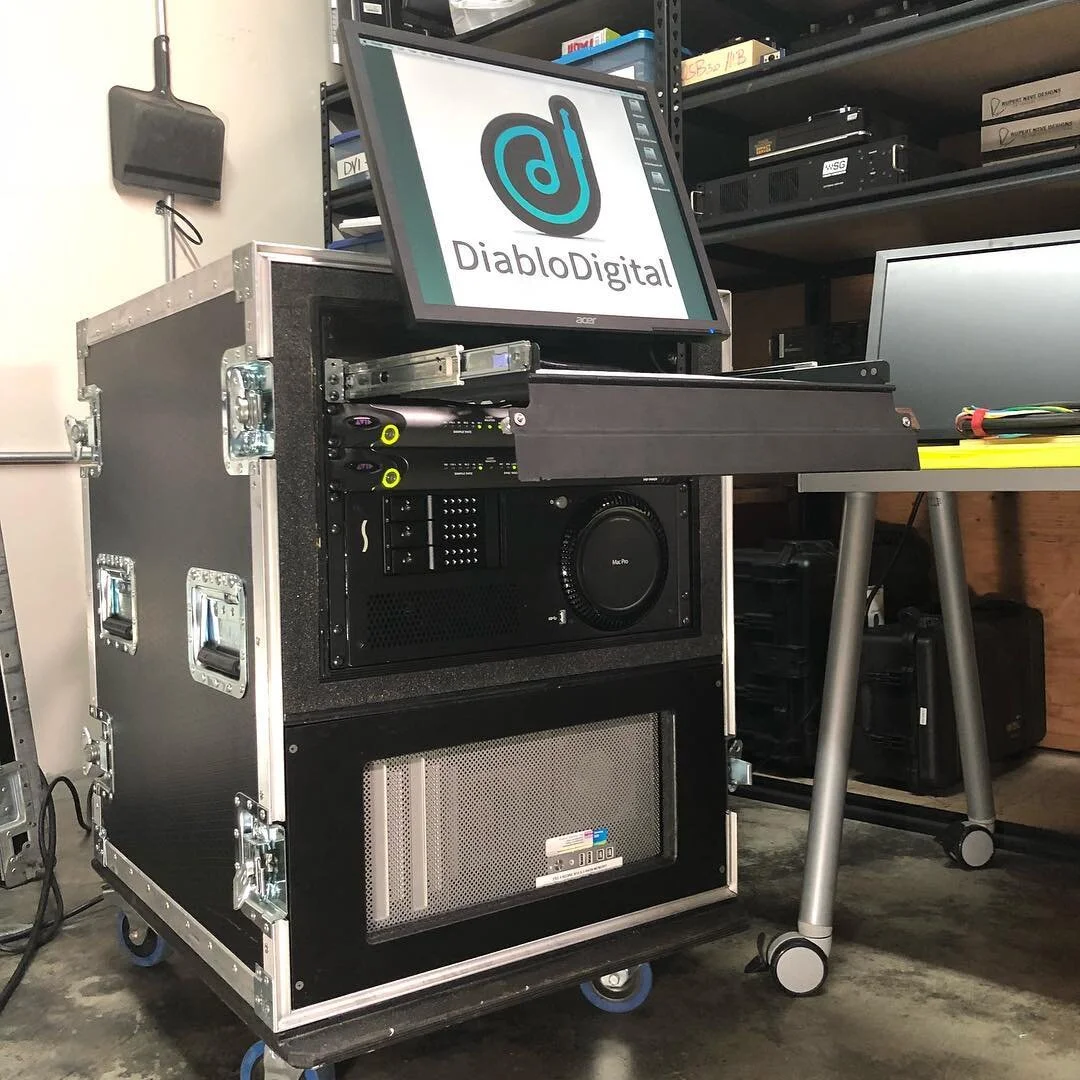
Greg Price and Brad Madix established Diablo Digital in 2013. They provide tours with high-quality easy-to-implement touring multi-track recorders