Lee Brenkman: From the Family Dog to the Great American Music Halll
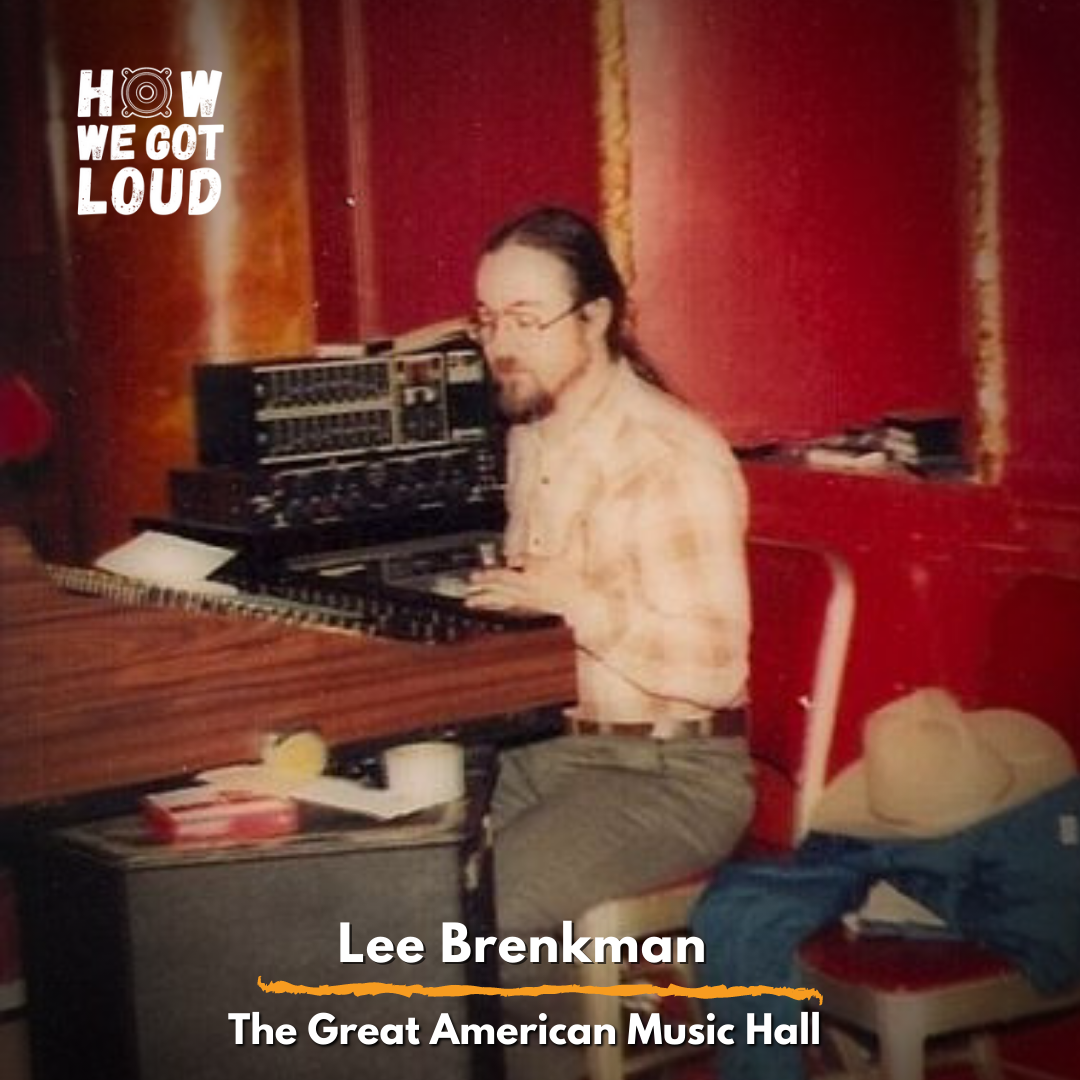
Lee Brenkman’s career connects two very different eras of live sound. He began when many clubs had little more than a vocal system operated from the side of the stage. He went on to spend more than four decades behind the mixer at San Francisco’s Great American Music Hall, adapting to generations of new equipment while holding onto the same basic goal: make the performers comfortable and let the music work.
In this episode of How We Got Loud, I talk with Lee about the Denver Family Dog, Jimi Hendrix at Regis College, the Avalon Ballroom, Bob Cohen and the beginnings of Clear-Com, touring with Lamb, and nearly five decades of sound work at the Great American Music Hall.
Lee’s story is not only about famous performers or particular pieces of equipment. It is about the development of the house sound engineer as a trusted and essential part of the performance.
Lee Brenkman at a Glance
Occupation: Live-sound engineer, house technician, department head, and educator
Early work: Family Dog Denver, Avalon Ballroom, Family Dog on the Great Highway, and Lumiere Productions
San Francisco arrival: July 4, 1968
Great American Music Hall: Began working there in 1973 and remained active through at least 2019
Touring connection: Lamb under Fillmore Management
Technical-history connection: Firsthand witness to Bob Cohen and Charlie Butten developing an early production-intercom concept that became part of Clear-Com
Later work: Sound on Stage, Stanford Jazz Workshop, Anthony Brown’s Asian American Orchestra, and the California Jazz Conservatory
Historical importance: More than five decades of firsthand experience connecting early ballroom sound systems with modern venue production
Learning Sound Before There Were Schools
Lee’s technical education began long before live sound had formal training programs.
As a child, he became involved with his school’s audiovisual department, learning to operate projectors, screens, tape recorders, and classroom sound equipment. Teachers began pulling him out of class to set up equipment elsewhere in the building. That early responsibility gave him practical experience solving problems with the tools available, a pattern that continued throughout his career.
By high school, Lee was working with bands and learning the basic public-address systems used in Colorado clubs. Many of these systems consisted of small mixer-amplifiers feeding column loudspeakers from the side of the stage. They were primarily vocal systems. Guitar and bass amplifiers, drums, and other backline equipment produced most of the room sound.
There was no front-of-house position as we now understand it, and there was often very little equipment to mix. The job was to get the vocals above the band without causing feedback.
“You turn the vocal mics up until they feed back, back them off, and that’s what you get.”
The Denver Family Dog and Jimi Hendrix at Regis College
Lee eventually became the soundman at the Denver Family Dog, part of the broader Family Dog organization associated with Chet Helms and the San Francisco ballroom scene.
On February 14, 1968, the Jimi Hendrix Experience performed at the Regis College Fieldhouse in Denver. The touring vocal system used a Vox Churchill mixer-amplifier feeding two Vox column loudspeakers, but the system did not adequately cover patrons positioned around the fieldhouse’s elevated running track.
Lee brought two Altec A7 Voice of the Theatre cabinets and an Altec amplifier from the Family Dog. He dropped a cable to the touring system and used the Altec cabinets to supplement the areas that the Vox system could not reach.
In Lee’s words, he became “the local supplement PA.”
The story provides a clear example of how local and touring systems were combined before large self-contained touring sound packages became standard. The touring crew brought the primary vocal system, while the local soundman supplied additional coverage using equipment borrowed from a nearby club.
The stage itself remained largely dependent on backline. Marshall and Sunn amplifiers produced much of the room sound, while the PA was expected to carry the vocals over the top.
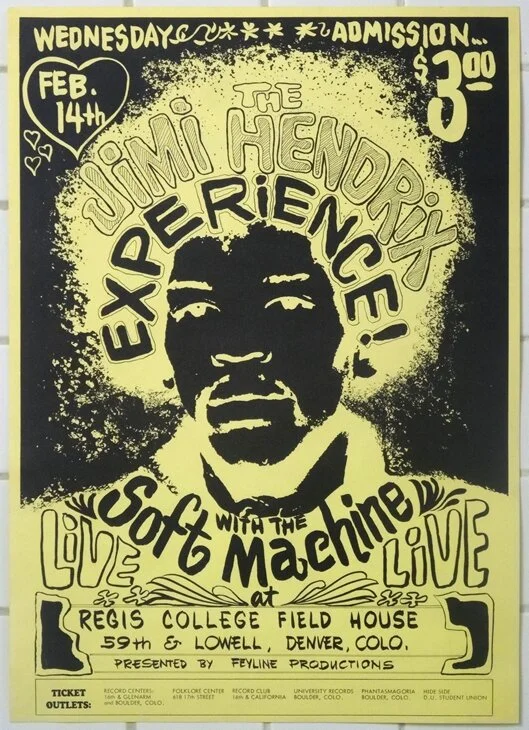
The Jimi Hendrix Experience at Regis College Fieldhouse in Denver on February 14, 1968. Lee Brenkman supplemented the touring Vox Churchill vocal system with two Altec A7 cabinets and an Altec amplifier from the Denver Family Dog
A surviving recording of the performance is available through the official Jimi Hendrix website.
https://www.jimihendrix.com/concert-broadcast/regis-college-fieldhouse-2141968/
July 4, 1968: From Denver to San Francisco
The Denver Family Dog struggled against police pressure, fragile finances, and the challenges facing counterculture venues during the late 1960s. When the operation closed, Lee loaded Family Dog business records and unsold posters into a 1954 Chevrolet Suburban and drove west.
He arrived in San Francisco on July 4, 1968.
Lee reported to the Family Dog office on Gough Street and began working at the Avalon Ballroom the following weekend. That transition placed him directly inside one of the most important music and production communities of the late 1960s.
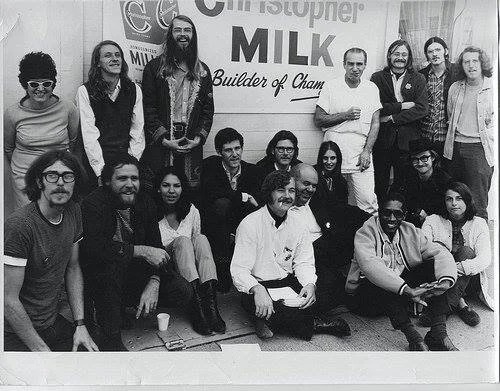
1968 Family Dog/Avalon Ballroom staff, Lee Brenkman on the right in the second row, cowboy hat and glasses.
The Avalon Ballroom and Bob Cohen’s Sound System
At the Avalon, Lee worked with a sound system designed and operated by Bob Cohen.
The system was based largely around Altec equipment, including Voice of the Theatre-derived loudspeakers and two Altec 1567 tube mixers. Each mixer provided only four microphone inputs, with basic shared tone controls. By modern standards, the system was extremely limited, but it was part of a rapidly developing approach to installed live sound.
The Avalon’s room geometry was also part of the system. The stage was positioned in a corner, with loudspeakers arranged to cover the dance floor. Drapes, projection surfaces, the sprung floor, and the shape of the ballroom all affected what Lee heard.
One particularly memorable technical detail involved the protection of the Avalon’s fragile aluminum high-frequency diaphragms. Cohen wired automotive tail lamps in series with the high-frequency drivers. When the system was driven hard, excess energy illuminated the lamps instead of immediately destroying the diaphragms.
Lee remembers watching the lamps brighten and dim as Corky Siegel played harmonica into a microphone. The circuit made the overload condition both visible and protective.
The Avalon also had a recording room built around a modified Altec broadcast console and an Ampex four-track recorder. Selected performances were recorded using separate stage boxes, depending on whether a particular show was going to tape.
This placed Lee at the intersection of live reinforcement, remote recording, custom electronics, and the early preservation of ballroom performances.
When the Vocals Became a Rumor
The limitations of early vocal systems became especially clear with extremely loud bands.
Lee uses Blue Cheer as one of his strongest examples. When the band’s stage volume became high enough, the PA could no longer meaningfully place the vocals above it.
“When you got into Blue Cheer, the vocals were just a rumor.”
The comment captures an important distinction between early and modern live sound. The engineer was not always mixing the entire band. In many cases, the band mixed itself through stage volume and internal dynamics, while the PA supplied only the elements that needed help.
Lee credits many early bands with understanding this relationship. When a vocal entered, the musicians could reduce their intensity and create space for it. That kind of internal control allowed small systems to perform beyond what their specifications would suggest.
Family Dog on the Great Highway
After the Avalon period, the Family Dog moved its San Francisco operation to the former Edgewater Ballroom on the Great Highway.
The room used stages at opposite ends, with loudspeaker systems serving both performance areas. A modified version of Cohen’s Avalon recording console was repurposed as the house PA mixer, but only one console served the two stages.
The concept called for nearly continuous entertainment. While the crew repatched the system from one end of the room to the other, a house troupe of percussionists and dancers helped cover the transition.
It was an ambitious programming idea built around very limited production infrastructure.
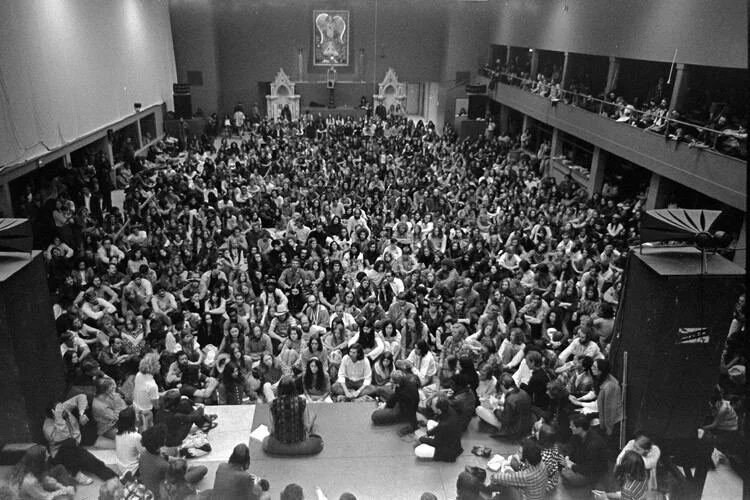
Steve Gaskin’s “Monday Night Class” at the Family Dog on the Great Highway shows the the two stage, two speaker system setup we discussed in the episode
Lumiere Productions and an Early Clear-Com Concept
Bob Cohen later established Lumiere Productions, a Bay Area sound company involved in rentals, system design, recording, and custom electronics.
Lee worked at Lumiere and remembers being at a shop bench while Cohen and Charlie Butten sat on the floor drawing an intercom system on a roll of butcher paper.
The system they were discussing addressed limitations found in the production intercoms then available. Their concept placed microphone amplification, switching, and call functions at the individual user positions, with power distributed through the communication line.
Those features are familiar today, but they were not standard at the time.
“That sounds absolutely common now, but it did not exist in 1970.”
Lee’s account is valuable because it presents invention as a practical response to an existing production problem. He was not reconstructing the story from a later company history. He remembers being present while the concept was being discussed and drawn.
His testimony does not, by itself, resolve every question about development sequence, ownership, or invention priority. It does preserve a firsthand view of Cohen and Butten working through an early Clear-Com concept inside the Lumiere shop.
Touring with Lamb
Lee later went on the road with the Bay Area folk-rock group Lamb under Fillmore Management.
The work took him into venues including My Father’s Place, the Bottom Line, and the Forum. He remembers dates with Billy Joel, Taj Mahal, and Humble Pie, along with the challenges of touring without a large self-contained production package.
Lamb carried a custom monitor pair built around JBL components and powered by a McIntosh MC275 amplifier. Lee patched the traveling monitor system into whatever local PA was available.
At the Forum, Lamb received only a few minutes to soundcheck after Steve Marriott and Humble Pie arrived late. At other venues, Lee had to learn the installed system quickly and create a workable show with almost no preparation.
These experiences placed him inside a regional touring network where visiting engineers depended heavily on local equipment, house technicians, and rental companies.
Five Semis and One Buick Station Wagon
One of Lee’s best touring stories comes from a Neil Young performance at the Oakland Coliseum.
Lamb was called to replace Linda Ronstadt as the support act. Lee and drummer David Perper loaded the band’s complete backline into a Buick station wagon and drove to the venue.
When they arrived, the loading area was filled with the headliner’s production trucks. The dock crew did not believe that the station wagon contained the opening act until Bill Graham’s office confirmed the booking.
“What credible band playing an arena show is showing up in a station wagon?”
The scale difference was dramatic, but Lamb still carried everything it needed to perform.
The show also exposed Lee to a Northwest Sound system and an unusual prototype used to reinforce Jack Nitzsche’s piano. Lee remembers two cabinets containing large numbers of small drivers, driven by a Countryman Class D amplifier. One cabinet was positioned near Nitzsche, while another supplied piano coverage to the rest of the band.
The exact models and power ratings still require verification, but Lee’s description may preserve an important early example of specialized piano reinforcement and Class D amplification.
Seven Dollars and Fifty Cents and a Beer
Lee’s relationship with the Great American Music Hall began in 1973 with an eighteen-piece Monday-night big band.
Pianist Tom Salisbury asked Lee to improve the sound and offered him half of the band’s fifteen-dollar sound budget, plus a beer.
“I went down every Monday night for $7.50 and a beer for several weeks.”
After the owners heard the improvement, Lee was offered a week-long engagement with Bill Evans. What began as a modest Monday-night job developed into one of the longest house-engineer relationships documented by How We Got Loud.
Lee was still doing sound at the Great American Music Hall in 2019, approximately forty-six years after he began.
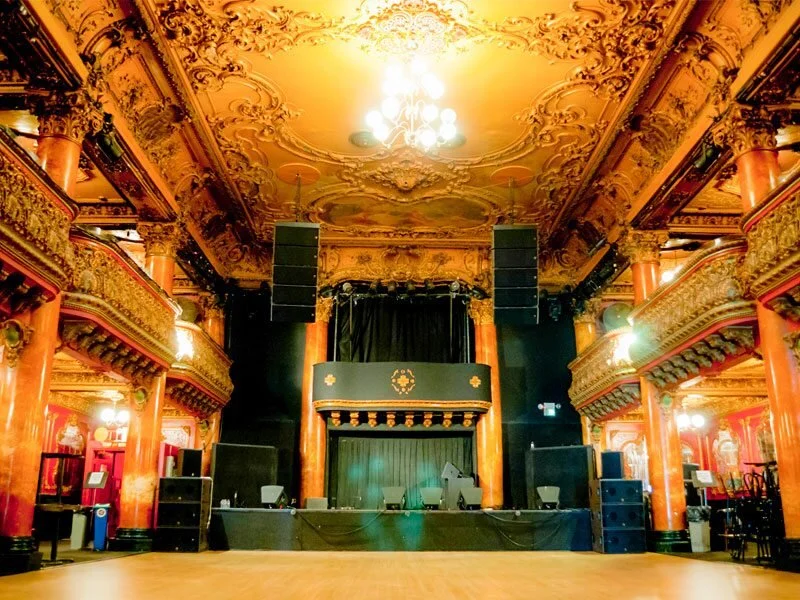
The Great American Music Hall in San Francisco, where Lee Brenkman began working in 1973 and remained associated with the sound department for more than four decades
Building the Great American Music Hall Sound System
When Lee arrived, the Music Hall’s sound system consisted of two Electro-Voice Century Four cabinets and a low-impedance Shure Vocal Master mixer-amplifier operated from the side of the stage.
There were only a handful of microphones and very limited monitoring. Lee gradually helped move the system toward a more flexible front-of-house arrangement.
The console history Lee remembers includes the Shure Vocal Master, Shure SR101, Soundcraft Series 1S, Yamaha PM-700, a Yamaha model identified in the original photograph caption as a 1516, a Tycobrahe Blue Board, Soundcraft Venue, Soundcraft K2, Yamaha M7CL, and Digidesign Venue Profile.
The exact dates and overlap between several of these mixers remain open research questions, but the overall progression documents an installed venue moving from a simple vocal system to a modern digital production environment.
The Music Hall in 1983
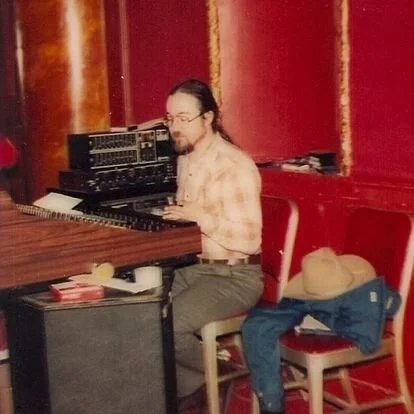
1983 Great American Music Hall. Lee Brenkman mixing on a Yamaha 1516 console with Tapco graphic EQ and Master Room spring reverb. The “console stand” is a pair of then empty cabinets from GAMH’s first “real” monitor speakers, Altec 1221s.
The photograph documents more than a mixer. It captures the practical reuse of older equipment, the Music Hall’s analog processing rack, and the kind of incremental system development common in independent venues.
Recording and Dubbing Tapes
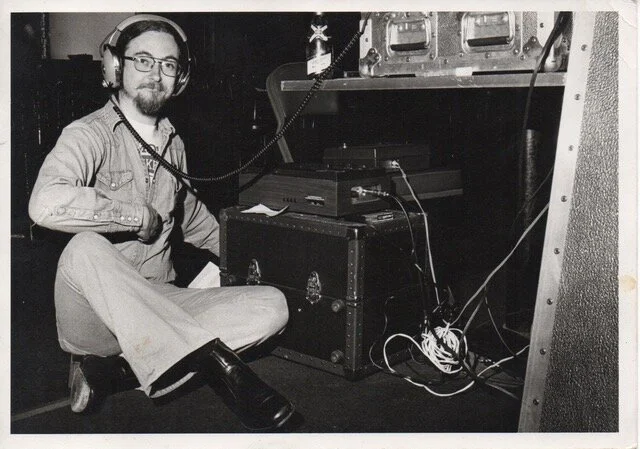
Lee Brenkman “Dubbing tapes”. Soundcraft 1s console in its integral aluminum road case and an Advent 201 cassette machine.
Lee’s recording experience extended back to the Avalon, where live reinforcement and four-track recording shared parts of the same infrastructure. At the Music Hall, recording could require separate microphones, improvised splits, or practical workarounds depending on the production and equipment available.
His habit of saving photographs, brochures, files, and recordings also reflects the archival mindset that runs through the interview.
The Music Hall in 1995
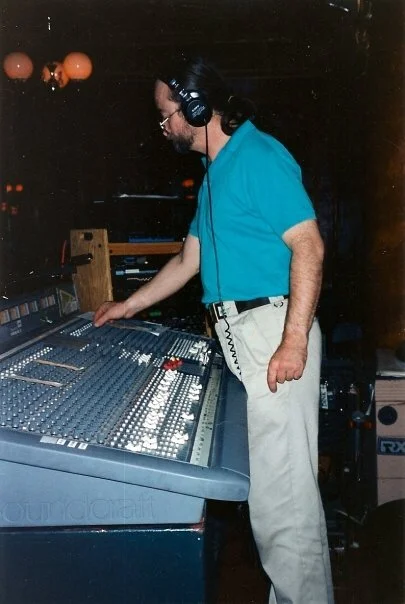
Lee mixing on a Soundcraft in 1995 at the Great American Music Hall
Placed beside the 1983 photograph, this image helps show the gradual technical progression of the room. The equipment changed, but Lee’s accumulated knowledge of the venue remained one of the system’s most important components.
Duke Ellington’s Final San Francisco Engagement
Lee remembers the Great American Music Hall purchasing a multi-night Duke Ellington engagement and dividing the performances among the Music Hall, the Marin Civic Center, and Oakland Auditorium.
Ellington reportedly enjoyed the Music Hall and wanted to return, but died before that plan could be realized. A dressing-room sign bearing his name remained in the venue for years.
Lee remembers the engagement as Ellington’s final San Francisco appearances. The exact dates and venue sequence should still be checked against advertisements, reviews, agency records, and surviving programs.
The story is important because it connects artist history with the economics and routing decisions of an independent venue. It also points toward a possible surviving physical artifact inside the building.
Robin Williams and Live Television at the Music Hall
Lee also witnessed part of Robin Williams’ rise through San Francisco comedy.
During the Great American Laugh Off, Williams reached the end of his allotted time while the audience was erupting. Lee remembers the director deciding not to cut him, reasoning that the production could use the additional laughter elsewhere in the program.
Lee connects that performance with later opportunities that led toward Mork & Mindy. Williams later returned to the Great American Music Hall for HBO productions.
The exact titles, dates, and production credits still need to be identified, but Lee’s account provides a house-level view of Williams’ performance and the real-time decisions made by a live television crew.
A Neighbor’s CB Radio Invades the Music Hall
Not every memorable Music Hall story involved a famous artist.
At one point, the venue used a Tycobrahe Blue Board. Lee remembers the mixer suffering from severe radio-frequency interference, particularly when headphones acted as an antenna.
The apparent source was a powerful CB transmitter in an adjoining apartment building. During quieter singer-songwriter performances, sideband noise from the transmitter could break into the system and become clearly audible.
The problem connected the Blue Board’s input design, the venue’s urban environment, and the practical limits of otherwise respected equipment. Similar interference issues led Lee to add RF-filter capacitors to the microphone inputs of the Soundcraft Series 1S.
The story is a reminder that a mixer does not operate in isolation. The building, neighborhood, electrical environment, cabling, and local radio activity all become part of the system.
Learning What to Leave Out
Lee’s approach to jazz and acoustic music was based as much on restraint as reinforcement.
A large drum kit might have several microphones available, but that did not mean every microphone needed to be placed into the PA. If the room already carried the instrument naturally, Lee left it alone.
“You learn what to leave out.”
For a dense and powerful group such as Billy Cobham’s band, extensive close miking might be necessary. For a guitarist such as Joe Pass, the room and stage sound could do much more of the work.
This ability to adjust the scale of the system to the music became one of the central advantages of a long-term house engineer. Lee knew how the room behaved, what it naturally reinforced, and where additional sound would help or hurt.
Translating “Chapped Lips” Into a Monitor Mix
Before Tom Waits carried a large touring production, Lee remembers Waits asking for monitors that sounded as if they had “chapped lips.”
It was not conventional technical language, but Lee understood that the request described a feeling rather than a specific equalizer setting. He translated the image into a balance of edge, controlled sibilance, ambience, and intelligibility.
“I want my monitors to sound like they got chapped lips.”
Waits was satisfied.
The story captures a large part of the sound engineer’s job. Performers do not always describe sound using frequencies, filter types, or processing terms. The engineer must listen to the language, understand the intended result, and convert an artistic description into technical action.
Effects, Experimental Music, and the Master-Room Reverb
A performance of George Crumb’s Black Angels by the Kronos Quartet led the Music Hall to purchase its first external reverb.
Lee remembers buying a Master-Room spring reverb whose three springs could be blended. The effects rack later expanded to include an MXR Digital Delay, a DeltaLab Effectron, and eventually Yamaha digital processing such as the REV7.
This is a useful example of programming driving equipment acquisition. The venue did not purchase the reverb simply because a new product became available. It was acquired to solve a specific artistic need created by a particular piece of music.
Windham Hill at the Greek Theater
Lee’s work was not limited to the Great American Music Hall.
In 1983, he mixed a Windham Hill production at the Greek Theater using a Gamble HC 40 console. Sound on Stage supplied its proprietary Power Physics loudspeaker system.
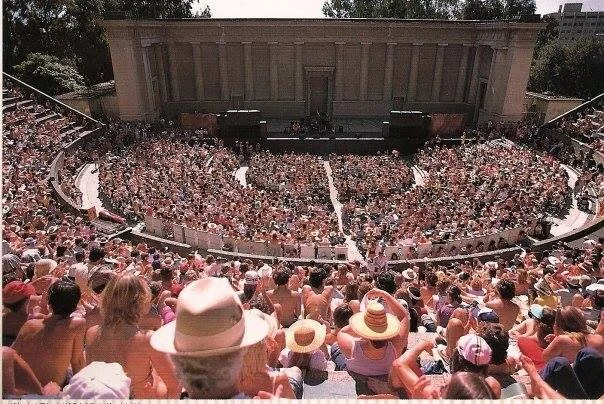
Windham Hill at the Greek Theater in 1983. Lee Brenkman is mixing on a Gamble HC 40 console. The loudspeakers are Sound on Stage’s proprietary Power Physics cabinets
The photograph expands Lee’s story beyond one venue and documents his connection with Sound on Stage, Jerry Pfeffer, Gamble consoles, and the broader Bay Area sound-company community.
Stanford Jazz and the Digital Era
Beginning around 1998, Lee became involved with the Stanford Jazz Workshop, working with professional faculty, student ensembles, and artists across a wide range of jazz traditions.
The work required the same judgment he developed at the Music Hall, but in an educational and festival environment. Lee also worked extensively with Anthony Brown’s Asian American Orchestra, mixing ensembles that combined jazz orchestration with Chinese, Persian, Japanese, and other musical traditions.
Brown reportedly called him “Mr. Wizard,” reflecting the trust built through a relationship lasting nearly thirty years.
Lee also taught at the California Jazz Conservatory, passing forward the kind of practical knowledge that had not been available through formal schools when he began.
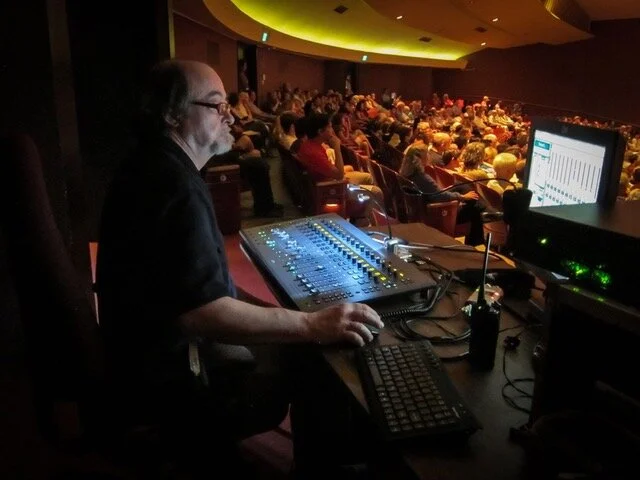
Lee Brenkman mixing on an Avid S3L for the Stanford Jazz Workshop. The photograph represents the digital end of a career that began with tube mixers, column loudspeakers, and vocal-only PA systems.
People and Companies Connected to Lee’s Story
Lee’s career provides connections to a large network of people and companies important to West Coast live-sound history.
Bob Cohen, Charlie Butten, Chet Helms, Bill Graham, Carl Countryman, Jerry Pfeffer, Jim Gamble, Fred Catero, Don Pearson, Mark Wayne, Ross Ritto, Dave Shadoan, Jeff Cressman, and Anthony Brown all appear in different parts of his story.
The companies and organizations include Family Dog Productions, Lumiere Productions, Clear-Com, McCune Sound Service, Swanson Sound Service, Corcoran Sound, Stanal Sound, Sound on Stage, Tycobrahe, Northwest Sound, Sound Image, UltraSound, Harbinger, Stanford Jazz Workshop, and the California Jazz Conservatory.
These connections show how a house engineer’s career can reveal an entire regional ecosystem. Equipment moved between companies. Engineers learned from one another. Visiting systems passed through local venues. Musicians carried technical practices from one room to the next.
Lee’s story is therefore larger than a single biography or venue history. It offers a path through the people, systems, companies, and working relationships that helped shape Bay Area live sound.
The Trusted House Engineer
When asked about his legacy, Lee does not focus on the largest show, the most famous performer, or the most expensive system.
He describes the expression on a musician’s face when they arrive at a venue, recognize him, and know that they are in good hands.
That moment of relief is how Lee measures success.
His answer captures the historical importance of the house sound engineer. A long-term house engineer holds knowledge that cannot be replaced by a system diagram or a visiting crew. That knowledge includes the room’s behavior, the strengths and weaknesses of the installed equipment, the working habits of returning performers, neighborhood limitations, production history, and the accumulated memory of thousands of shows.
Lee Brenkman’s career connects the Denver Family Dog to the Avalon Ballroom, Bob Cohen and Clear-Com, touring with Lamb, and approximately forty-six years of system and artist history at the Great American Music Hall.
He may never have considered himself the star, but he was present for an extraordinary span of live-sound history.
Listen to the complete episode to hear Lee tell these stories in his own words.
Research and Source Note
This page is based primarily on Chris Leonard’s How We Got Loud oral-history interview with Lee Brenkman.
Names and brands have been normalized where the intended reading is clear. Some dates, equipment models, company relationships, and event details remain based on memory and require additional documentation. Where appropriate, the language distinguishes Lee’s firsthand experiences from later information or interpretations attributed to other sources.
The interview audio remains the final authority for direct quotations, names, and technical details.
How We Got Loud welcomes photographs, documents, corrections, equipment records, and additional firsthand accounts that can strengthen this history.